
Top dress a lawn in early autumn or spring, spreading a thin 3 to 5mm layer and working it into the grass so about three-quarters of each blade still shows. Top dressing levels bumps and hollows, dilutes thatch, improves the surface and drainage, and gives new seed a fine bed to root into.
Get the timing, the depth and the aftercare right and a tired, uneven lawn comes back thicker and flatter by spring. This guide covers what top dressing is made of, the tools, the right timing, the method step by step, how to level an uneven or waterlogged lawn, how much you need, the cost, and how often to repeat it.
Ready to order?
Order Top Dressing in bulk bags for delivery across the south of England, and size the job with the turf and topsoil calculator.
What is lawn top dressing?
Lawn top dressing is a graded, free-flowing blend of screened soil and sand, made to be spread in a thin layer over grass and worked into the surface. The grading is what matters. It is milled fine and even so it falls between the blades and settles onto the soil rather than sitting on top and smothering the lawn, and the sand content keeps it free-draining and easy to brush in. Sherborne Turf blends its Top Dressing for exactly this job, which is what separates it from a levelling topsoil that sits too heavy, or a bag of sharp sand used on its own that adds no soil at all. As a working guide, a bulk bag holds roughly 0.73m³, about a tonne, and is sold loose by the tonne for larger lawns.
What does top dressing do for a lawn?
Top dressing improves an established lawn from the surface down, and it earns its place because it does four jobs in a single pass. First, it fills the minor bumps and hollows that build up over the years, so the mower stops scalping the high spots. Second, it dilutes the spongy thatch layer of dead stems and roots that stops water, air and feed reaching the soil. Third, the sand in it opens up the surface, so the lawn drains faster and stays firmer underfoot after rain. Fourth, it lays down a fine, level bed that lifts the germination of any seed you sow at the same time. Those four benefits together are why top dressing sits at the heart of an autumn renovation rather than being an optional extra.
Is top dressing worth it?
Top dressing is one of the highest-value jobs you can do on a lawn, because it fixes the surface itself rather than just greening it up for a fortnight. A single bulk bag covers a typical back lawn and costs far less than hiring a contractor for the same result, and the improvement compounds year on year as the thatch stays in check and the surface levels out. For a lawn that scalps on the bumps, puddles after rain or feels spongy underfoot, dressing is usually the difference maker where more mowing and feeding are not. The one caveat is that it rewards patience: the gain shows over a season, not overnight.
Sand or soil-based top dressing: which do you need?
Choose by the problem you are solving. A sandier dressing drains fast and suits waterlogged, heavy or sports-style lawns that need the surface opening up and firming. A loamier, soil-based dressing holds a little more moisture and levels a touch better, which suits most domestic lawns that are simply uneven or thatchy. Sherborne Turf's top dressing is graded as a balanced lawn dressing, so it levels and improves without either drying the surface out or capping it over, and it answers the “top dressing soil” and “lawn sand top dressing” searches with one product rather than sending you to buy two and mix your own.
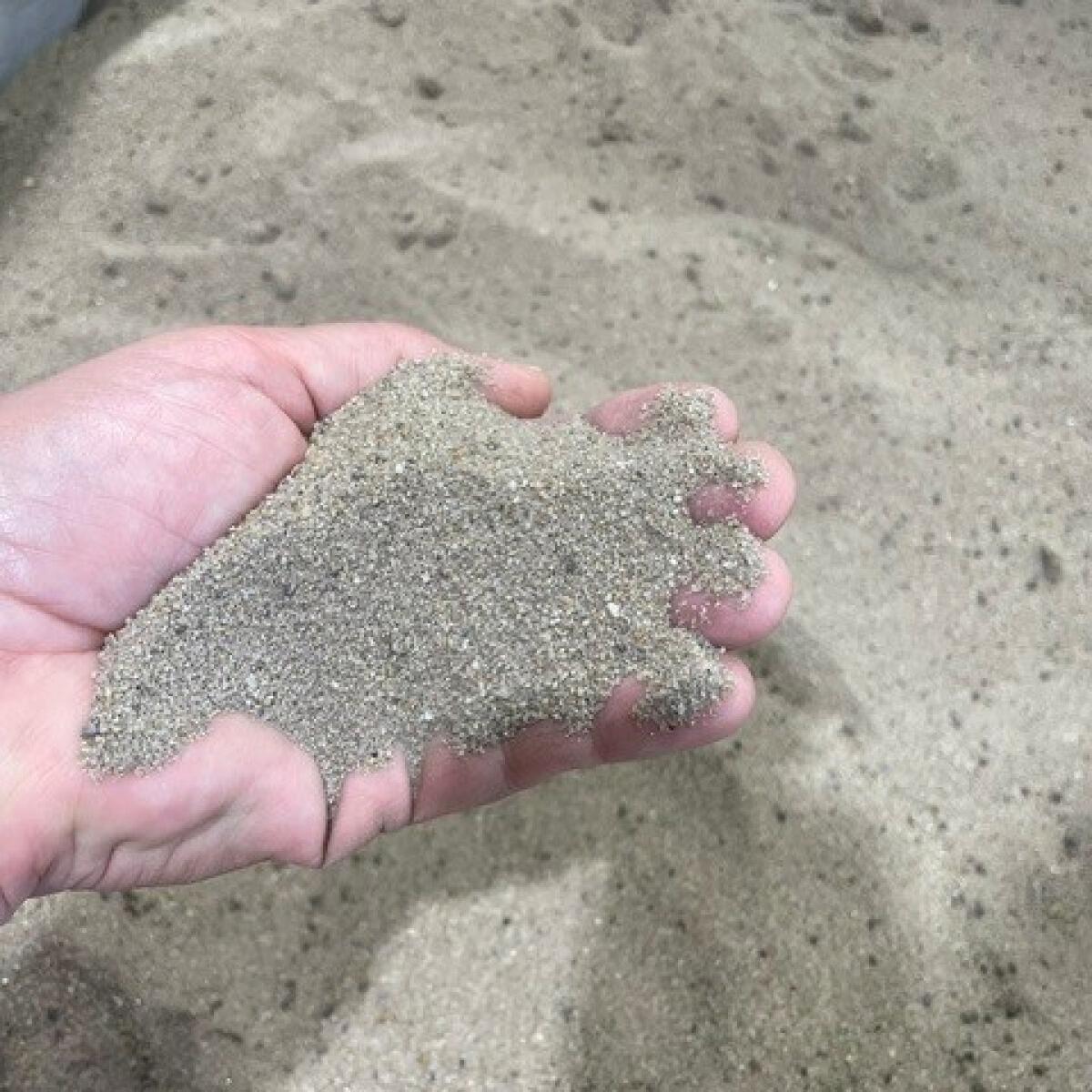
Top Dressing
Graded fine so it drops between the blades instead of capping the lawn. One bulk bag holds 0.73m³, roughly a tonne, and covers around 240m² at 3mm. Loose by the tonne suits anything larger.
When should you top dress a lawn?
Top dress when the grass is growing well enough to recover, which in practice means early autumn or spring. September is the strongest window, because the soil is still warm from summer, sitting around 12 to 15°C, and autumn rain does the watering while the grass grows back up through the dressing. Spring, around April, is the second choice, once the lawn is growing again after winter. Avoid dressing in frost, in drought, or in the height of summer, when the grass is stressed and slow to push through the material and a dressing can smother rather than help. Read the lawn as much as the calendar: if it is green and growing, the timing is right; if it is dormant or baked hard, wait.
What tools do you need?
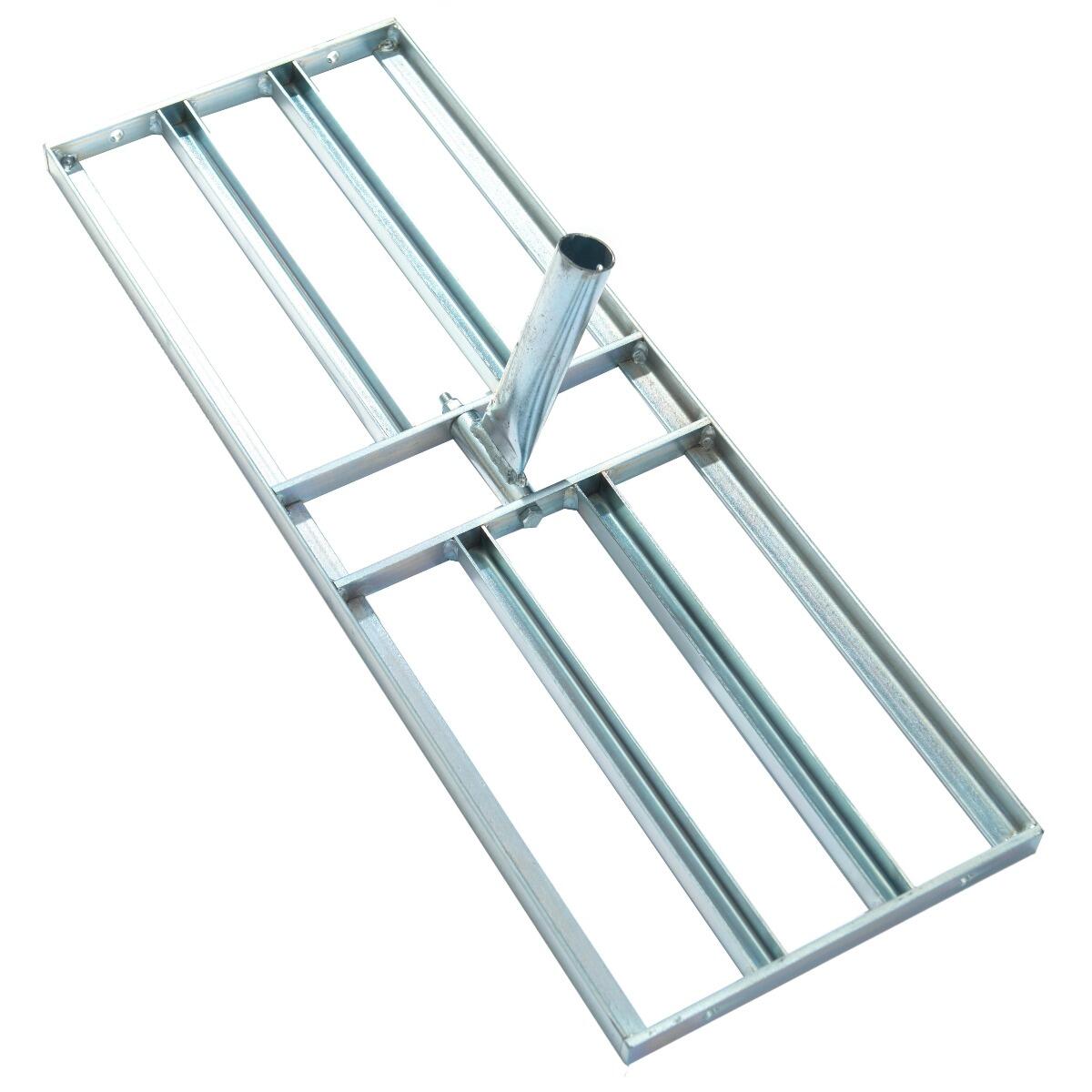
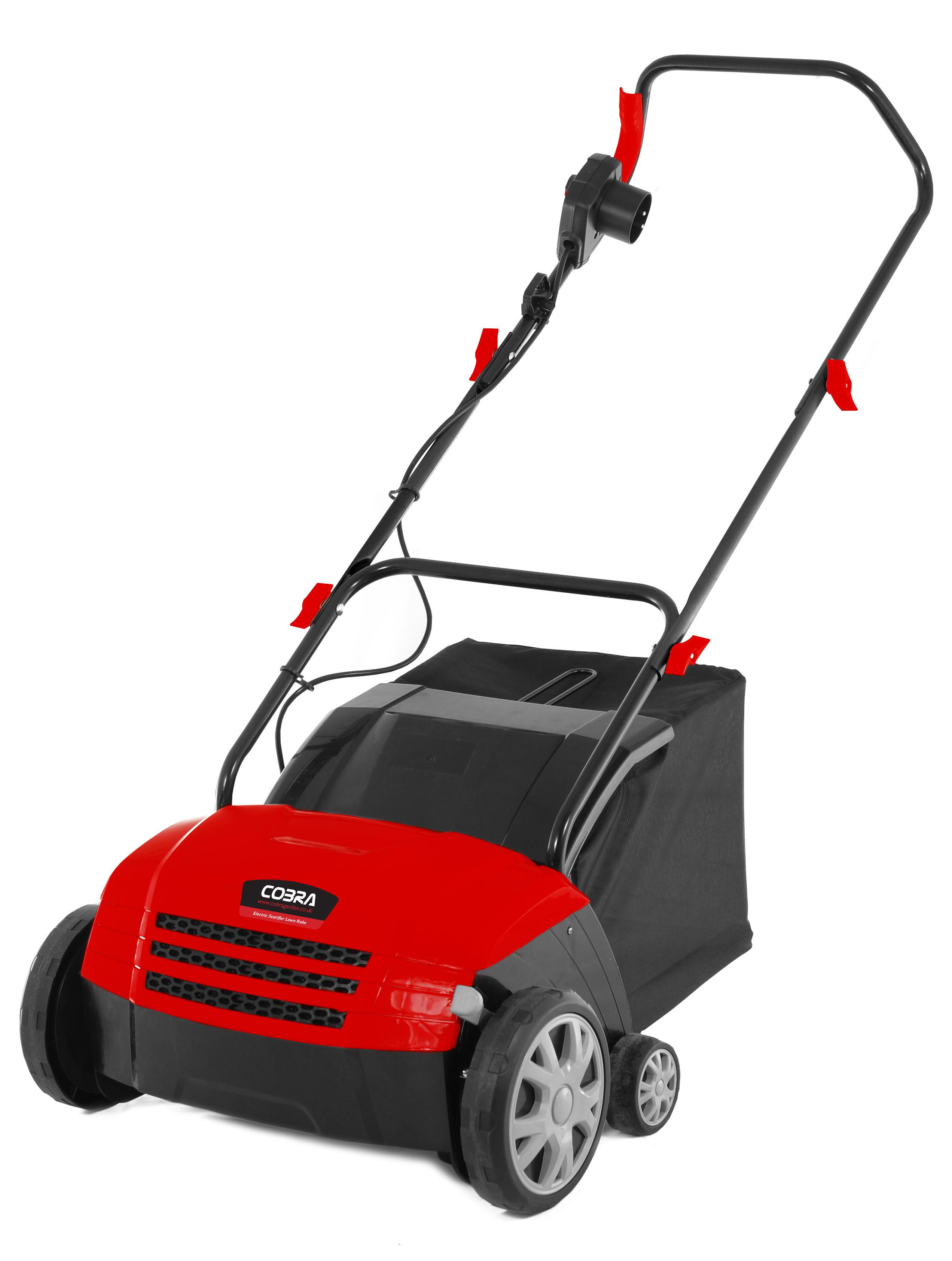
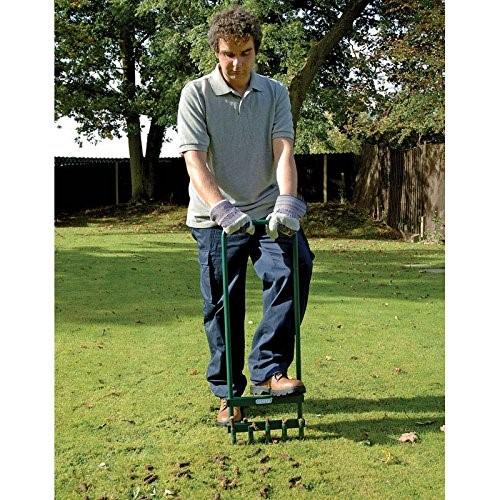
You need very little kit, which is part of why top dressing is a job most people can do themselves. A wheelbarrow and a shovel move and tip the material; a lute, sometimes called a chelute, or a stiff yard brush works it down between the blades; and a spring-tine rake or a drag mat spreads it level on a smaller lawn. If you are scarifying and aerating first, a scarifier or spring-tine rake and a hollow-tine or solid-tine aerator complete the set, and a spreader helps if you are overseeding at the same time. Browse the scarifiers and lawn tools if you are gearing up for the full renovation.
How to apply top dressing, step by step
Apply top dressing in a thin, even layer and work it in, ideally after the lawn has been prepared. The order that works:
Mow, scarify and aerate first
Mow the lawn on a slightly lower cut than usual, then scarify to pull out the thatch and moss, and aerate any compacted or worn areas. Dressing onto a clean, opened surface lets the material drop through to the soil rather than perching on a mat of thatch, and the aeration holes give it somewhere to settle.
Spread 3 to 5mm evenly
Tip small heaps across the lawn and spread them out by hand or shovel to an average of 3 to 5mm. Work on a dry day, when the material flows and brushes in far more easily than when it is damp and claggy. Heavier layers over deeper hollows are fine, but keep the general depth light and resist the urge to dump it thick to save a second visit.
Work it in with a lute or brush
Drag a lute or stiff brush back and forth in different directions so the dressing drops between the blades and about 75% of each blade still shows. This is the step people skip, and it is the one that decides whether the lawn is helped or smothered. A drag mat, or simply the back of a rake, does the same job on a smaller lawn.
Overseed and water in
Overseed thin and bare areas with ST Overseed grass seed at around 25g per m² as you dress, so the new grass roots into the fresh surface, then water it in if no rain is due. Keep the surface just moist for the first two to three weeks while the seed germinates, because a dry seedbed is the commonest reason a dressed lawn comes up patchy.
How much top dressing do you need?
Work out the area, then use the coverage figures. A 0.73m³ bulk bag holds roughly a tonne and covers about 240m² at 3mm, or around 140m² at a heavier 6mm. So a 200m² back lawn dressed at a standard 3mm takes a single bulk bag with a little to spare, a 100m² lawn takes half a bag, and a large 400m² plot at 3mm takes close to two bags or a loose load. For loose deliveries you can book up to 9 tonnes within our delivery area, which works out cheaper per tonne on bigger lawns. Order a touch over rather than under, because the low spots always take more than you expect. The turf and topsoil calculator turns your measurements into bags, and for the bag-versus-loose choice see loose loads or bulk bags.
A bulk bag of Top Dressing holds 0.73m³, roughly a tonne, and dresses a 240m² lawn at 3mm, so most Dorset and Somerset back gardens are a one-bag job. Bigger lawns and paddocks go loose by the tonne, up to 9 tonnes on one delivery. If you only want to patch a few square metres, the yard sells it in refill bags and by the kilogram for collection.
How to top dress a bumpy or hollow lawn
Level a bumpy lawn with thin, repeated dressings rather than one thick layer, because a heavy dressing over a hollow will smother and kill the grass beneath it. For shallow unevenness, a single 5mm dressing brushed in will settle the surface over a few weeks as the grass grows through. For deeper hollows, from squirrel or mole damage, heavy footfall or the ghost of an old path, build the level up over two or three dressings across a season or two, letting the grass grow through each layer before adding the next. Where a hollow is more than about 20mm deep, it is quicker to lift the turf, add topsoil underneath and relay it than to keep dressing over the top. High bumps are the opposite job: slice and lift the turf, remove some soil, then relay and dress lightly.
Top dressing a waterlogged or heavy lawn
For a lawn that puddles and stays soggy, a sandy top dressing worked in after aeration is one of the few surface fixes that genuinely helps. Hollow-tine the lawn to pull cores and open channels, brush a sandy dressing into the holes and across the surface, and repeat each autumn. Over two or three seasons the sand builds a freer-draining top layer that shifts water off faster. It will not cure a drainage problem caused by a hard pan or a high water table, which needs proper land drainage, but for the common case of a compacted, heavy-topped lawn it is the affordable first move, and it pairs naturally with an autumn renovation.
Two autumns of sandy dressing brushed into aeration holes changes how a heavy lawn handles rain. Book the bag now and the soil is still warm when it goes down.
Can you top dress new turf or a new lawn?
Top dress an established lawn, not brand-new turf or seed. Freshly laid turf and newly sown grass need their roots to knit into the soil first, so wait until the lawn has been mown several times and is growing strongly, usually the following autumn, before dressing it. A light 3mm dressing in a young lawn's first autumn then helps level any settlement at the seams and thickens the sward, without setting back grass that is still establishing. If you are laying new turf this season, dress it next year, not this one.
Top dressing versus topsoil versus lawn sand
These three get muddled, and using the wrong one sets a lawn back. Top dressing is graded to work into an existing sward in a thin layer and improve it. Topsoil is a heavier fill for levelling bare ground, filling beds or building up before you lay new turf, and spread over grass it caps the surface and smothers the lawn. Plain lawn sand is only sand, so it drains and firms but adds no soil or nutrition, and on its own it dries a lawn out. Top dressing gives you the best of the middle ground: the drainage of sand with enough graded soil to work into the lawn. For the topsoil grades themselves, see screened against premium topsoil.
How often should you top dress?
Top dress once a year on a lawn you are actively improving, or every couple of years to maintain a good one. A light annual 3mm dressing as part of the autumn renovation keeps thatch in check, holds the surface level and steadily improves the top few centimetres of soil. Once the lawn is where you want it, a maintenance dressing every second or third autumn holds it there. There is nothing to gain from dressing more than once a year, and doing so risks building up too much material and burying the crowns of the grass.
What to pair with top dressing
Top dressing does its best work as part of a set. Overseed as you dress with ST Overseed grass seed so the new grass roots into the fresh surface, feed with Stripy Green fertiliser to build roots, or choose an iron-rich autumn feed from the fertiliser range to harden the lawn for winter. Done together in early autumn, and in the right order set out in the autumn lawn renovation guide, seed, dressing and feed turn a tired lawn into a thicker, more even one by spring, which is far more than any one of them does alone.

Aftercare: what to do once it is down
The fortnight after dressing decides the result. Keep any seeded areas just moist, watering lightly and often rather than heavily now and then, so the surface never dries out while the seed germinates. Stay off the lawn as much as you can, and keep children and pets to the edges, so footprints do not press the fresh surface into hollows. Leave the first mow until the new grass reaches about 100mm, then take only the top third off with a sharp blade set high. Hold back the next feed until the lawn is growing steadily, and by mid-autumn a well-dressed lawn is knitting together and greening up for the year ahead.
Two worked examples
A 200m² family back lawn in Sherborne, bumpy from years of play and thin along the wear lines, was mown low, scarified and aerated over a weekend, then dressed with a single 0.73m³ bulk bag at 3mm, overseeded at 25g per m² and fed with an autumn feed. Watered lightly for a fortnight and roped off from the children, it came through winter recovering and returned in spring noticeably flatter and greener, all off one bag of dressing and a box of seed.
A heavy 120m² lawn that puddled by the back door was hollow-tined to pull cores, then brushed with a sandier dressing worked hard into the holes, about two-thirds of a bulk bag. Repeated the following autumn, the boggy patch by the door had firmed up and shed water far faster, turning a corner that had been unusable in winter into part of the lawn again.
Lawn top dressing FAQ
When is the best time to top dress a lawn?
Early autumn, around September, is best, with spring as a second option. Dress while the grass is actively growing and the soil is warm, and avoid frost, drought and high summer.
How much top dressing do I need?
About one 0.73m³ bulk bag per 240m² at a 3mm depth, or per 140m² at 6mm. Enter your lawn size in the calculator for the exact number of bags.
How thick should I spread it?
An average of 3 to 5mm, worked in so roughly 75% of the grass blade still shows. Thicker layers smother the grass, so keep it light and even.
Can I use topsoil instead of top dressing?
Use top dressing for lawns. It is graded to work into the sward, whereas topsoil is made for levelling and filling and sits too heavy on grass.
Will top dressing help a waterlogged lawn?
Yes, a sandy dressing worked into aeration holes each autumn builds a freer-draining top layer. It will not fix drainage caused by a hard pan or high water table, which needs land drainage.
Will top dressing level a bumpy lawn?
Yes, but over more than one dressing for deeper hollows. Build the level up with thin repeat layers so you never smother the grass. Very deep hollows are better fixed by lifting and relaying the turf.
Should I scarify before top dressing?
Yes, ideally. Scarifying clears the thatch and opens the surface so the dressing settles where it helps and overseeding takes.
Can I top dress new turf?
Not straight away. Let new turf root and establish over its first season, then a light dressing the following autumn helps level any settlement.
How often should I top dress my lawn?
Once a year while improving a lawn, then every second or third autumn to maintain it. More than once a year risks building up too much material.
Do you deliver top dressing locally?
Yes, across the south of England, charged by postcode, with loose loads up to 9 tonnes and collection from the Sherborne yard as an option.
Should You Buy Loose Loads or Bulk Bags for Landscaping Materials?
Where the crossover point sits between bagged and loose, and how access, storage and project size decide it.
Read loose loads against bulk bags →How Much Topsoil Do You Need Before Laying Turf?
The depths a new lawn base wants, and how to turn an area into tonnes and bulk bags before the rolls arrive.
Read how much topsoil a turf base needs →Top dress this autumn
Sherborne Turf has grown and supplied turf, topsoil and lawn materials from Dorset for around fifty years, and it delivers lawn top dressing, grass seed and feed on its own vehicles across the south of England, with Dorset, Somerset, Devon, Hampshire and Wiltshire the key counties, and bagged orders nationwide by pallet line, from The Lawn and Landscape Centre in Sherborne, DT9 4GH, or for collection from the yard. Order Top Dressing with ST Overseed grass seed and Stripy Green fertiliser, size the job with the calculator, and call 01935 850388 for a delivery quote or advice on a specific lawn.
Call 01935 850388 or email enquiries@sherborneturf.co.uk for a postcode delivery quote. Groundcare teams and landscapers taking loose loads can apply for a trade account.


