
Wildflower turf usually gives faster visible coverage than seed mixes because it arrives as a pre-grown living surface with grasses and wildflowers already established in the turf layer. Seed mixes can work well, especially for larger or lower-budget areas, but they take longer to germinate, fill out and compete with weeds. Faster coverage does not always mean instant peak flowering, so buyers still need to think about season, soil, light, watering and aftercare. The right choice depends on area size, budget, timescale, site conditions and how much early-stage risk the buyer is willing to manage.
Wildflower turf gives faster visible coverage
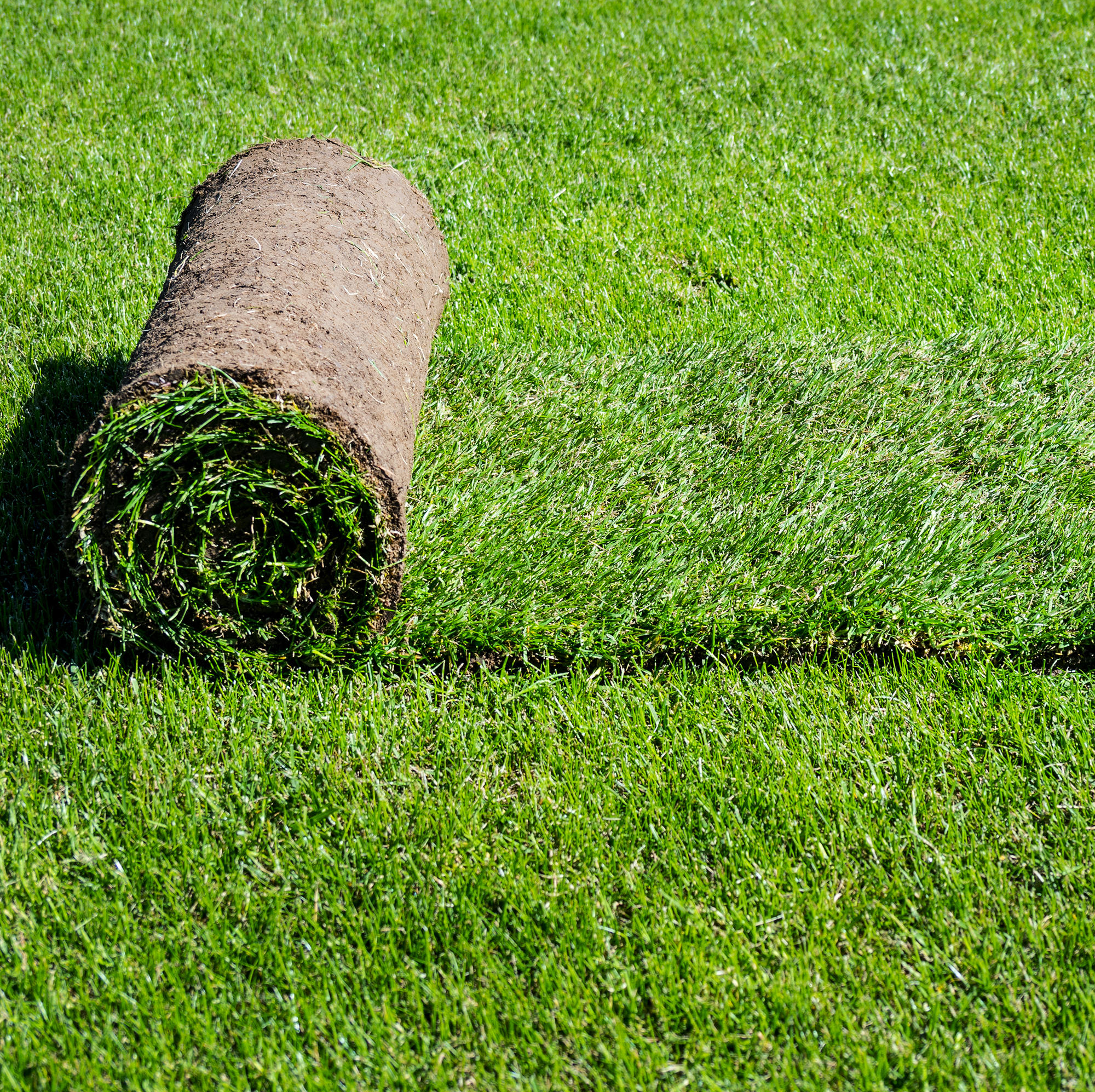
Wildflower turf gives faster visible coverage because it arrives as a pre-grown surface. The grasses and wildflower plants are already present in the turf layer, so the area looks more complete from the start.
Seed mixes begin from bare prepared soil. Seed has to make contact with the soil, germinate, survive weather, avoid being eaten or washed away, compete with weeds and then thicken over time. That process can work well, but it rarely gives the same immediate coverage as turf.
The speed difference matters when the area is visible, close to the house, part of a finished landscape design or needed for a project deadline. A meadow-style area grown from seed may look patchy in the early stages, while wildflower turf can give a cleaner starting point.
Wildflower turf vs seed mixes at a glance
Wildflower turf and seed mixes can both create meadow-style planting, but they behave differently during the early stages. A quick comparison helps buyers decide which option better suits the job.
| Buyer Need | Better Choice | Why |
|---|---|---|
| Fast visible coverage | Wildflower turf | Arrives as a pre-grown living surface |
| Lower upfront cost | Seed mix | Seed usually costs less to buy for large areas |
| Small feature area | Wildflower turf | Easier to create a defined meadow-style patch |
| Large budget-led area | Seed mix | Can be practical where time allows |
| Lower establishment risk | Wildflower turf | Gives coverage from the start |
| More patience available | Seed mix | Works when the buyer accepts slower change |
| Sloped or exposed area | Often wildflower turf | Less risk of seed movement after installation |
| Experimental or informal area | Seed mix | Allows slower, lower-cost trial planting |
The best answer may still be a planned mix. Some projects use wildflower turf in visible or harder-to-establish areas and seed in larger background areas where slower establishment is acceptable.
What is the real difference between wildflower turf and seed?
Wildflower turf is a pre-grown meadow-style surface, while seed is a starting material that still has to grow into a finished area. That difference affects speed, risk, appearance and aftercare.
A turf product gives the buyer a living layer to install. The wildflowers and grasses are already held within the turf structure, which can make establishment more predictable when the site is prepared correctly.
A seed mix gives the buyer potential rather than instant coverage. The final result depends heavily on soil contact, moisture, weed control, temperature, timing, birds, wash-off and aftercare.
Wildflower turf starts with plants already present
Wildflower turf starts ahead because the plants have already begun growing before the product reaches the garden. The buyer is installing an existing surface rather than waiting for bare ground to fill.
This does not remove the need for care. Wildflower turf still needs watering, soil contact and sensible maintenance while it establishes. It is quicker, not effortless.
Seed mixes start with bare soil
Seed mixes start from bare or prepared soil, which means the early stage can look empty, patchy or uneven. Some seeds germinate faster than others, and some areas may establish better than others.
Seed can still be a good option. It suits patient buyers, larger areas and projects where an uneven early stage is acceptable. The risk is that weeds, birds, dry weather or poor soil contact can affect the outcome before the meadow has properly started.
Faster coverage does not always mean instant flowering
Wildflower turf usually gives faster coverage, but flowering still depends on season, product type, species mix, cutting routine and establishment conditions. A pre-grown turf layer can make the area look more complete quickly, but it may not show peak flowering straight after installation.
First-year expectations should be realistic. Some plants may flower soon after laying if the timing is right. Others may flower later in the season or perform better after the area has settled. Weather, watering and the first maintenance cycle can all change the result.
Seeded areas usually need more patience in the first year. Some annuals may appear early, but longer-term meadow character can take more time. A seeded area can look thin, uneven or weedy before it starts to settle.
The better question is not only “which flowers fastest?” It is “which gives the right level of coverage, reliability and visual progress for this site?”
Seed mixes take longer and carry more early-stage risk
Seed mixes take longer because they need the full germination and establishment process. The early result depends on weather, watering, soil preparation and timing.
A seeded meadow area may take a season or more to look settled. Some plants may appear quickly, while others take longer. First-year growth can also differ from the final look after the area has matured.
Early-stage risk is the main trade-off. Seed can be affected by dry weather, heavy rain, birds, poor soil contact, weed competition and foot traffic. Buyers who expect a full meadow appearance quickly may be disappointed with seed. Buyers who accept a slower, changing result may find seed suitable, especially on larger or less visible areas.
Wildflower seed is not a quick fix for instant colour. It can be a good choice, but the early stage often looks bare, uneven or weedy before the meadow starts to settle. Wildflower turf is usually the safer choice when the area needs to look more complete quickly.
Soil preparation matters for both methods
Soil preparation matters whether the buyer chooses wildflower turf or seed. Poor preparation can weaken both options, even when the product itself is suitable.
Weeds should be dealt with before installation. Existing grass, aggressive weeds and compacted ground can all interfere with establishment. A seeded area is especially vulnerable because it starts with open soil, but turf can also struggle where the base is poor.
Soil contact is vital. Wildflower turf needs close contact with the prepared ground so roots can move into the soil below. Seed needs good contact with the soil surface so it can germinate evenly.
Drainage and light also matter. Wildflower areas usually need enough sunlight and a suitable base. Heavy shade, poor drainage or unsuitable ground can lead to disappointing results with either method.
Dorset and Somerset site conditions can change the decision
Local site conditions can affect whether wildflower turf or seed is the safer choice. Dorset and Somerset gardens can vary from clay-heavy ground to freer-draining soil, exposed banks, shaded edges, rural verges and larger estate areas.
Clay-heavy ground may need careful preparation before either turf or seed is used. Poor drainage can weaken establishment, while compacted soil can stop roots moving properly. Free-draining sites create the opposite problem, where seed or newly laid turf may dry quickly without steady moisture.
Exposed banks and slopes often favour wildflower turf because seed can move, wash away or establish unevenly. Shaded edges need more care because many flowering plants need enough light to perform well. Local advice helps buyers avoid choosing a product that looks right on paper but struggles on the real site.
Does wildflower turf need better soil than seed?
Wildflower turf does not always need richer soil than seed, but it does need a suitable prepared base. The right soil depends on the product, the site and the desired result.
Some wildflower meadow mixes prefer lower fertility because rich soil can encourage grass dominance. Other flowering lawn products may suit a more lawn-like routine. Product choice matters, so buyers should not assume every wildflower surface needs the same soil.
A prepared base should be weed-free, level enough for installation and suitable for rooting. The aim is not always to add rich compost or heavy feeding. The aim is to match the soil to the wildflower product.
This is where local advice helps. Sherborne Turf can help buyers decide whether the project needs soil preparation, Topsoil for Turf Preparation, a wildflower turf product, seed, clover turf or a different lawn surface.
Levelling a weak base first? General Purpose Topsoil at £62.30 per bulk bag is a barn-stored screened loam that gives wildflower turf or seed a firm, weed-free start. Get General Purpose Topsoil →
Seed mixes are cheaper upfront, but not always cheaper overall
Seed mixes are usually cheaper to buy upfront than wildflower turf, especially for large areas. This makes seed attractive for larger projects, lower-budget work and less visible areas where the buyer can wait.
The real cost depends on failure risk, preparation, weed control, time and rework. A seeded area that establishes poorly may need reseeding, extra weed management or another attempt. That can reduce the saving.
Wildflower turf costs more upfront, but it can reduce some early uncertainty. The buyer pays for a pre-grown product, faster coverage and a more immediate result.
The better value depends on the project. Seed may be good value for large patient schemes. Turf may be better value where speed, certainty and appearance matter more.
Where does wildflower turf work better than seed?
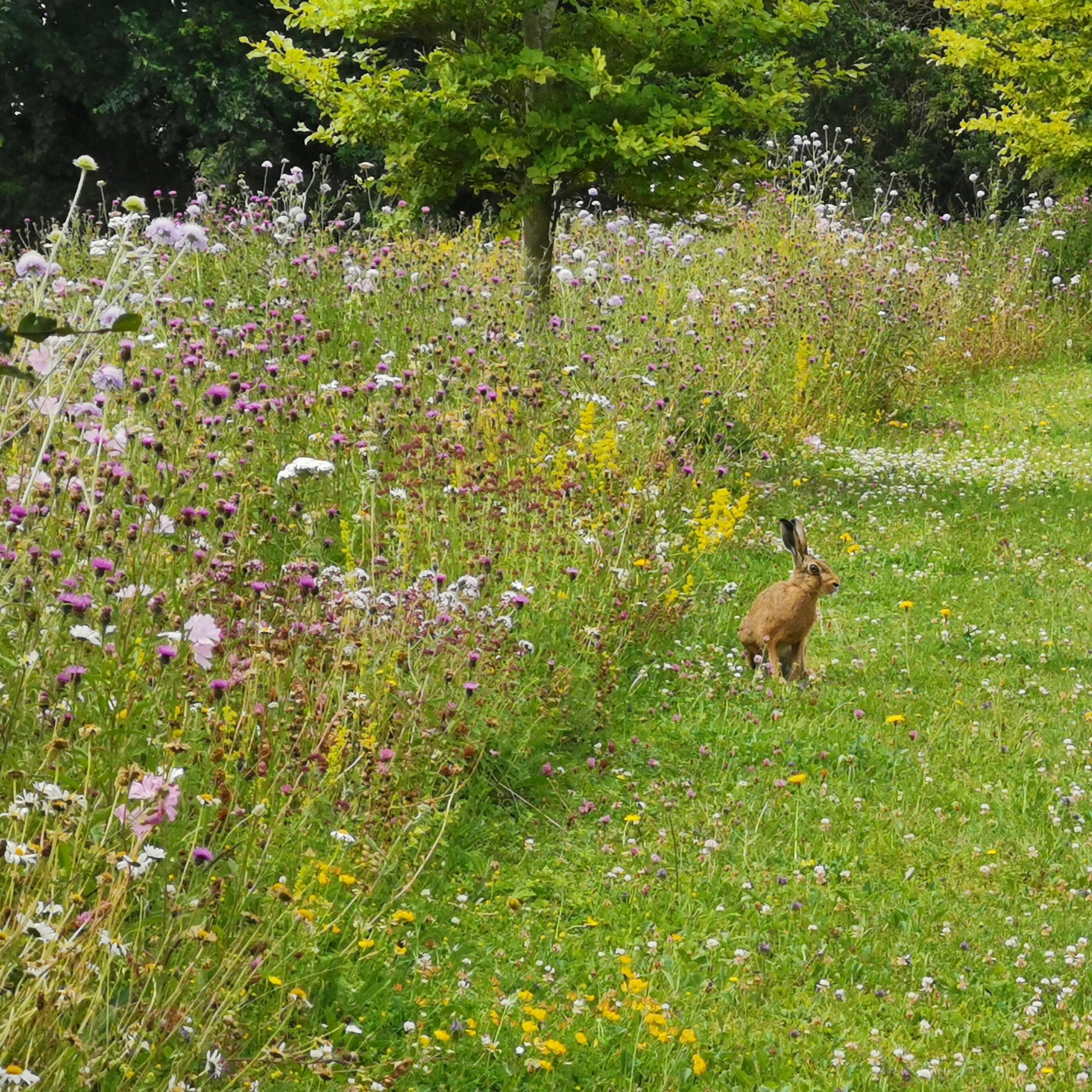
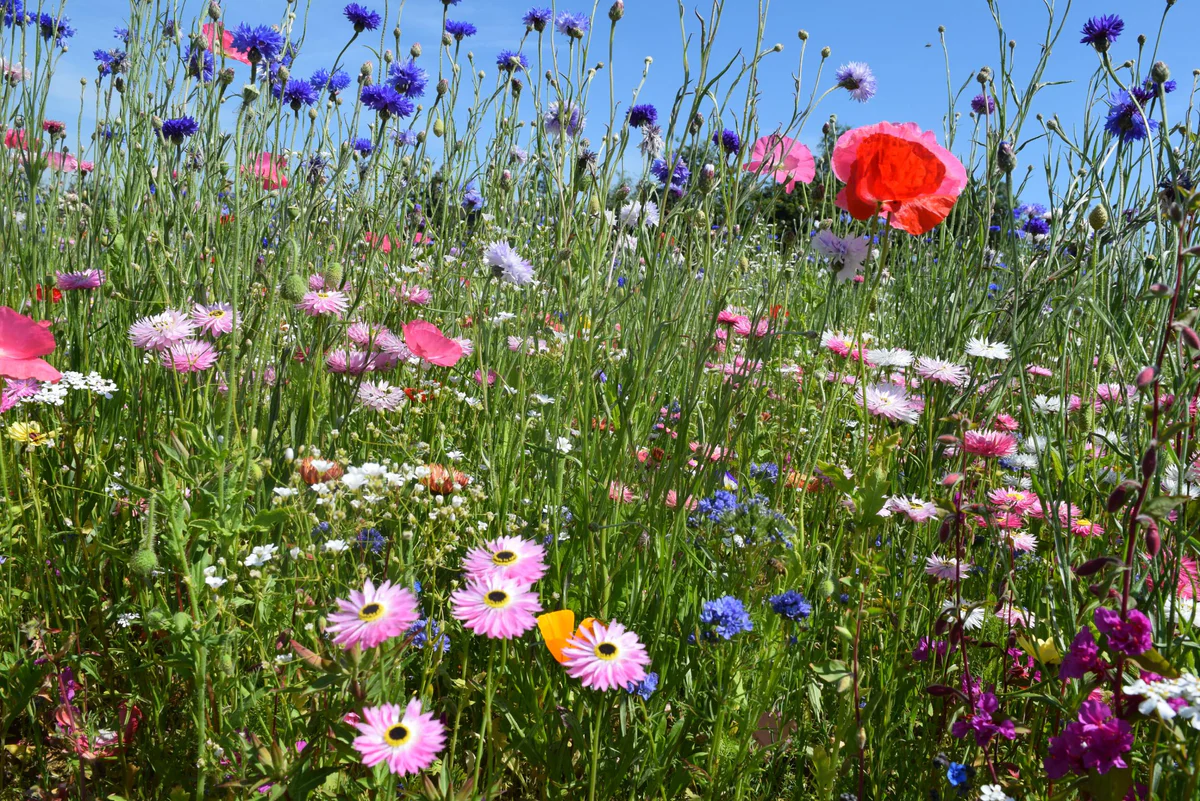
Wildflower turf works better than seed where the buyer wants quicker coverage, better early appearance and less bare ground during establishment. It can be especially useful in smaller or more visible areas.
Banks and slopes may also favour turf. Seed can move, wash away or establish unevenly on sloped ground, especially during heavy rain or dry spells. Turf gives a physical mat that is easier to place and hold in position when installed properly.
Visible garden zones often suit turf better. Front gardens, feature borders and areas near patios or paths may look unfinished for too long when seeded.
Trade and estate projects may also prefer turf where deadlines matter. A site that needs to look complete quickly may not have the time for seed to develop.
Where can seed mixes still make sense?
Seed mixes can make sense where the area is large, the budget is limited and the buyer accepts slower results. Seed can also suit informal projects where a changing, uneven early stage is acceptable.
Larger meadow areas may be more practical to seed because the cost of turf across a big area can be high. Seed also allows flexible coverage where exact edges or immediate finish are less important.
Seed can work well when the site is prepared properly, weed pressure is controlled and the timing is right. The buyer must be willing to manage the early stage. That means watering where needed, avoiding disturbance and accepting that some areas may take longer to fill.
How do weeds affect wildflower turf and seed?
Weeds affect both wildflower turf and seed, but seed mixes are usually more exposed to early weed pressure. Bare soil creates an opening for weed seeds to germinate before the wildflower mix has filled the space.
Wildflower turf covers the ground from the start, which can reduce some open-soil weed pressure. That does not mean weeds disappear. Poor preparation, surrounding weed growth and contaminated soil can still cause problems.
The best weed control happens before installation. Existing weeds should be removed, the site should be cleaned properly and the buyer should understand what early weed growth looks like. A wildflower area should not be treated with the same aggressive weed-control mindset as a standard lawn because some plants may be part of the intended mix.
How does timing affect wildflower turf and seed?
Timing affects both wildflower turf and seed because weather, soil temperature and moisture all influence establishment. Seed is usually more sensitive to timing because it needs the right conditions to germinate.
Wildflower turf can offer more flexibility because it arrives as an established layer, but it still needs moisture and soil contact. Hot, dry or windy weather can stress turf during establishment. Very wet or waterlogged ground can also create problems.
Seed needs a suitable sowing window and steady moisture. Heavy rain can move seed. Dry weather can stop germination. Birds and foot traffic can also affect results before plants are established.
The best time should be chosen around product type, site condition and aftercare capacity. A buyer who cannot water or protect the area may struggle with either option.
Can wildflower turf and seed be used together?
Wildflower turf and seed can be used together when different areas of the same project have different needs. A visible or difficult area may use turf, while a larger background area may be seeded.
This mixed approach can work for larger gardens, estates and trade projects. Turf can create quicker impact near paths, entrances, banks or focal points. Seed can cover less visible or larger sections where the buyer accepts slower growth.
Planning still matters. The two areas may establish at different speeds and may not look identical. Maintenance should also be planned carefully so cutting and aftercare suit each area.
Wildflower turf, seed and standard lawn all have different jobs
Wildflower turf, seed mixes and standard turf should not be treated as interchangeable products. Each one suits a different job.
Wildflower turf suits buyers who want quicker meadow-style coverage and a more finished start. Seed suits buyers who want a lower upfront cost and can accept more waiting. Standard lawn turf suits spaces that need daily use, regular mowing and a familiar grass surface.
A garden can use more than one option. A standard lawn can sit near the house, wildflower turf can soften a quieter edge, and seed may suit a larger informal area beyond that.
The best result comes from matching the surface to the role of each garden zone. Buyers unsure whether a meadow surface is right for the whole space may also find Wildflower Turf vs Standard Lawn useful before deciding.
Common mistakes when choosing wildflower turf or seed
Common mistakes usually come from choosing by price, photo appeal or trend rather than real site use. Both wildflower turf and seed can disappoint when the product is used in the wrong place.
| Mistake | Why It Causes Problems | Better Approach |
|---|---|---|
| Choosing seed for instant results | Seed needs time to germinate and fill | Choose turf where speed matters |
| Choosing turf without preparing the soil | Turf still needs good root contact | Prepare the base before delivery |
| Seeding into weedy ground | Weeds can dominate early growth | Clear the site before sowing |
| Using meadow products on the main play lawn | Foot traffic damages establishment | Keep meadow areas in quieter zones |
| Expecting identical results every season | Wildflower areas change through the year | Accept seasonal variation |
| Adding rich compost without checking suitability | Some mixes may not want high fertility | Match soil preparation to the product |
| Ignoring watering | Both turf and seed can fail in dry conditions | Plan moisture during establishment |
| Choosing one product for the whole garden | Different zones may need different surfaces | Match the surface to the job |
Most mistakes are avoidable when buyers start with the site and purpose, not just the product name.
How should homeowners choose between wildflower turf and seed?
Homeowners should choose between wildflower turf and seed by looking at the size of the area, how quickly it needs to look finished, how visible it is and how much early-stage management they can handle.
A small, visible garden area often suits wildflower turf. The faster coverage makes the area look planned rather than unfinished.
A large, informal area may suit seed where budget matters and the buyer has time. The early stage may look uneven, but the lower upfront cost can make sense.
A family garden may need both a practical lawn and a wildflower area. The main lawn can stay as standard turf or clover turf, while meadow-style planting can sit in a quieter corner, boundary strip or bank.
How should landscapers and contractors choose?
Landscapers and contractors should choose between wildflower turf and seed by looking at deadlines, site visibility, budget, weed pressure, access and client expectations. The installation method should match the promise made to the client.
A client who expects quick visual improvement may be better served by turf. A client who accepts a slower naturalisation process may be suitable for seed.
Contractors should also think about risk. Seeded areas can be affected by weather, birds, wash-off, weeds and uneven germination. Turf has a higher upfront cost, but it can give a more controlled start when the ground has been prepared properly.
For estate and larger landscape projects, a mixed plan may work well. Turf can be used where appearance matters most, while seed can cover larger background zones.
Faster results usually come from wildflower turf
Wildflower turf usually gives faster results than seed mixes because it starts as a pre-grown surface rather than bare soil. Seed can still be a good choice for larger or lower-budget areas, but it needs more time, patience and establishment care.
The right answer depends on the job. A visible garden feature, bank, verge or finished landscape area may suit wildflower turf. A large informal meadow area may suit seed. A family lawn may need standard turf near the house with wildflower planting placed in quieter zones.
Sherborne Turf can help homeowners, landscapers, contractors and estate buyers compare wildflower turf, seed, topsoil needs and delivery planning from its Sherborne base. Share the area size, soil condition, site use, access details and how quickly you want results, and the team can help match the right option to the project.


