
Wildflower turf creates a meadow-style surface with grasses and wildflowers, while standard lawn turf creates a neat grass surface for regular garden use. Wildflower turf suits quieter areas, natural planting schemes, banks, verges and biodiversity-focused projects. Standard turf suits family lawns, pets, seating areas, play spaces and formal gardens where clean edges and regular mowing matter. The right choice depends on how the space will be used, how natural it should look, how much maintenance is realistic and whether the soil, drainage and light levels suit the chosen surface.
- ✓Wildflower turf creates a meadow-style area with grasses and wildflowers.
- ✓Standard lawn turf creates a familiar green grass surface for regular use.
- ✓Wildflower turf supports pollinators and adds seasonal interest.
- ✓Standard turf is usually better for family lawns, play areas and formal finishes.
- ✓Wildflower turf needs a different cutting routine from a standard grass lawn.
- ✓Soil preparation, drainage and topsoil still matter before either turf type is laid.
- ✓Wildflower turf suits quieter areas, banks, verges, estate landscapes and natural borders.
- ✓Standard turf works better where the lawn needs foot traffic, clean edges and routine mowing.
- ✓Sherborne Turf can help buyers compare lawn types, topsoil needs and delivery planning.
Wildflower turf vs standard lawn at a glance
Wildflower turf and standard lawn turf work best in different parts of a garden. A quick comparison helps buyers understand the choice before looking at maintenance, soil and site conditions in more detail.
The best choice still depends on the real site. A wildflower area in the wrong place can disappoint, while a standard lawn in a biodiversity-led project may feel too plain. Many gardens work best when the two surfaces are used in different zones.
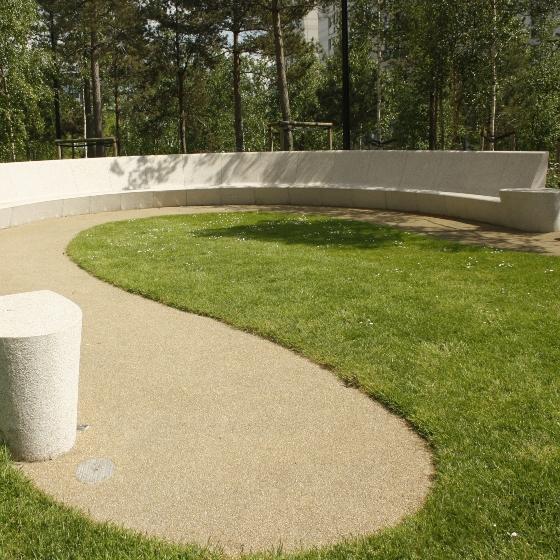
What is the real difference between wildflower turf and standard lawn turf?
Wildflower turf is designed for natural planting, biodiversity and seasonal interest, while standard lawn turf is designed for regular use, neat appearance and familiar grass coverage. The products look, grow and behave differently.
A standard lawn is usually managed as a short grass surface. Wildflower turf is managed more like a planted meadow area, where flowers and grasses need time to grow, flower and complete part of their seasonal cycle.
The real difference is not only the plant mix. The real difference is the purpose of the space.
Wildflower turf creates a meadow-style surface
Wildflower turf is a pre-grown turf product containing a mix of grasses and wildflowers. The buyer receives a living mat that can establish faster than loose seed in suitable conditions.
Meadow-style planting is the main reason customers choose it. Wildflower turf suits buyers who want colour, seasonal change, pollinator value and a softer natural look.
Standard lawn turf creates a usable grass surface
Standard lawn turf is a pre-grown grass surface used to create a neat and familiar lawn. It is usually chosen for domestic gardens, front lawns, family spaces and outdoor areas where a clean cut surface matters.
Traditional lawns are practical because most people already understand how they look and behave. Grass lawns are easier to mow regularly, edge neatly and use day to day.
Biodiversity, appearance and seasonal change shape the choice
Wildflower turf usually offers more biodiversity value than a standard grass lawn because it includes flowering plants, varied structure and seasonal growth. Bees, butterflies and other insects benefit when gardens include flowers that provide nectar and pollen.
Standard lawns usually offer less flowering value, especially when mown short. That does not make them useless for wildlife. Borders, hedges, shrubs, wildflower strips, relaxed edges and unmown corners can all add biodiversity around a standard lawn.
Appearance is just as important as ecology. Wildflower turf changes through the year as plants grow, flower, fade and are cut back. Standard lawn turf gives a more consistent green surface when maintained properly.
A buyer who wants a clipped lawn every month may prefer standard turf. A buyer who enjoys seasonal movement, flowers and a softer look may prefer wildflower turf.
Is wildflower turf lower maintenance than a standard lawn?
Wildflower turf can need less frequent cutting than a standard lawn, but it is not a no-maintenance surface. The maintenance is different, not absent.
A standard lawn usually needs more regular mowing during active growth. That routine is familiar to most homeowners and maintenance teams, which can make it easier to manage in everyday gardens.
Wildflower areas need a more seasonal approach. Cutting too often or too short can reduce flowering and weaken the meadow-style character. Buyers should be comfortable with a less controlled look before choosing wildflower turf.
Low maintenance depends on the owner's expectations. A wildflower area may reduce mowing, but it will not give a short, tidy lawn every week. A standard lawn may need more routine mowing, but the care process is simpler and more familiar.
Family use, pets and formal spaces often favour standard turf
Standard lawn turf is usually the better choice where the garden needs regular access, clean edges and predictable wear. Family lawns, play areas, seating spaces, pet routes and front lawns often need a practical grass surface.
Wildflower turf can work in parts of a family garden, but it is rarely the best choice for the main play lawn. Children, dogs, garden furniture and repeated walking can damage flowering areas before they develop properly.
Formal gardens usually suit standard turf more naturally. Clean lines, clipped edges and consistent texture are easier to achieve with a grass lawn.
Wildflower turf can still work in formal settings as a planned contrast. A framed meadow section, estate edge or designed natural area can look intentional when the product is placed carefully.
Where does wildflower turf work best?
Wildflower turf works best in areas where seasonal growth, flowering and a less formal look are welcome. Banks, verges, meadow areas, estate grounds, large gardens, natural borders and quieter corners often suit this product well.
Site choice matters. Wildflower areas need enough light, suitable soil and space to grow without constant disturbance. Heavy-use paths, children's play areas and dog routes are usually better served by standard turf.
Large gardens and estates can be especially suitable. Bigger sites often have space for meadow-style features, banks, verges and natural edges. These areas can add seasonal interest without needing the same close mowing routine as a traditional lawn.
From everyday lawn to full meadow — three real options
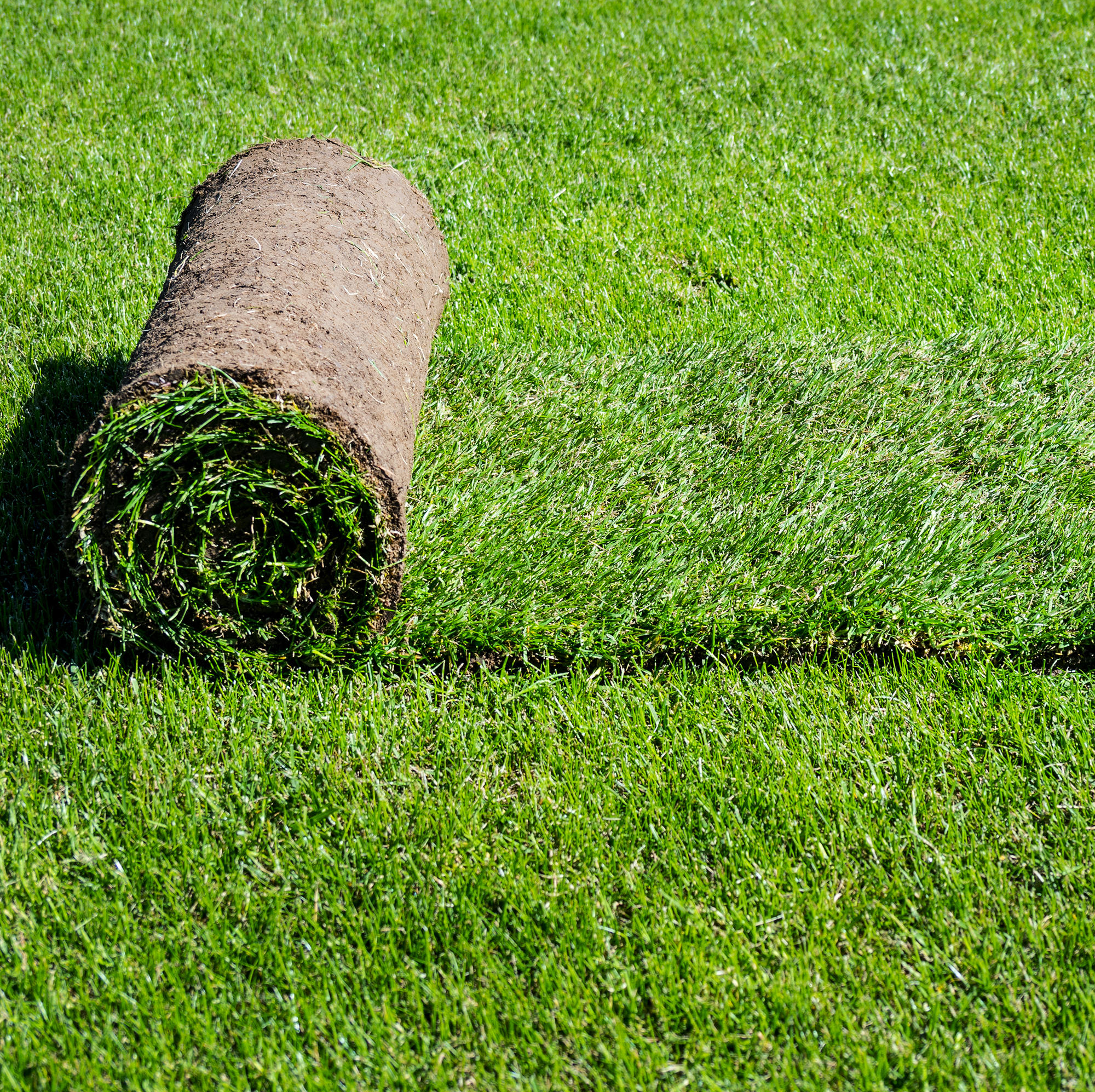
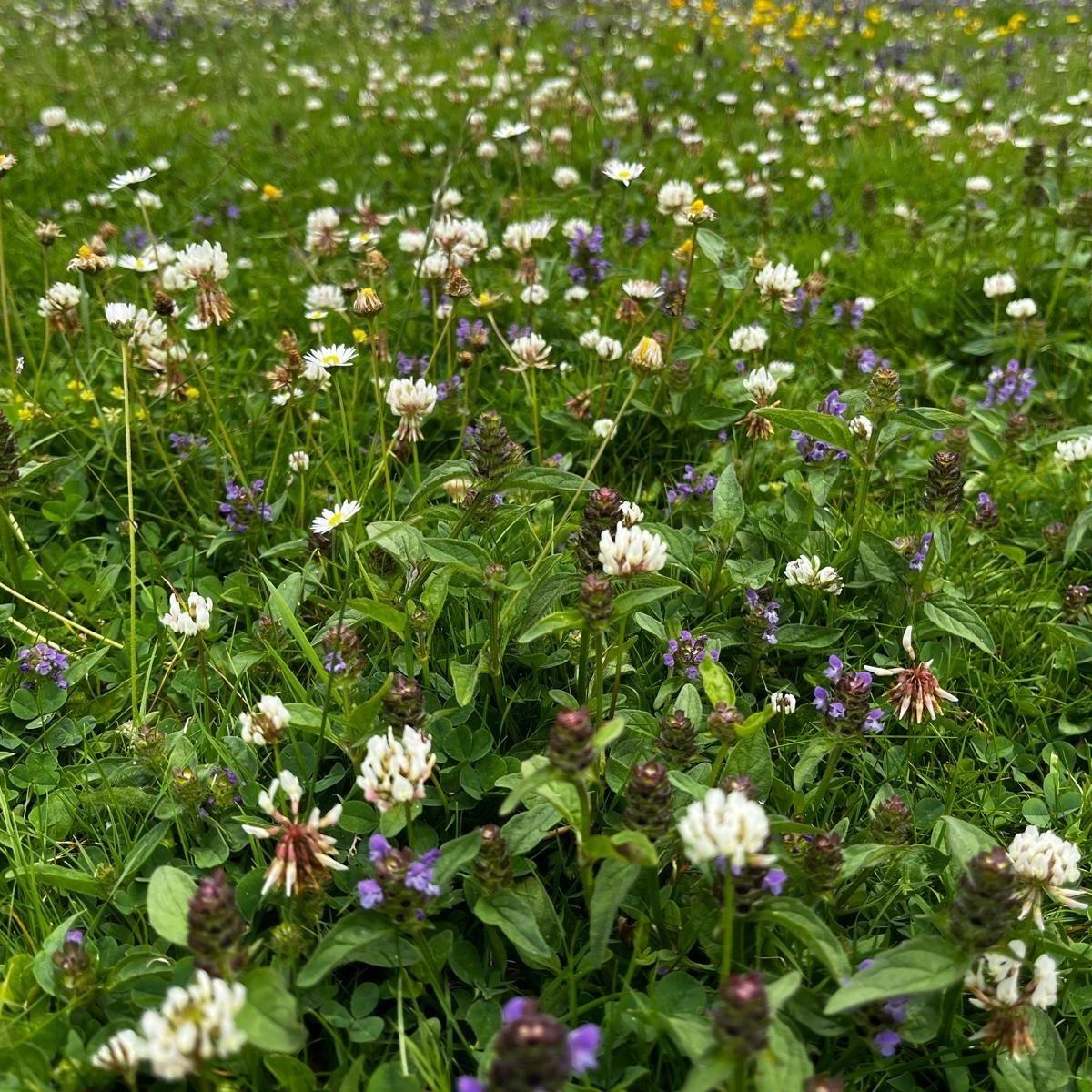
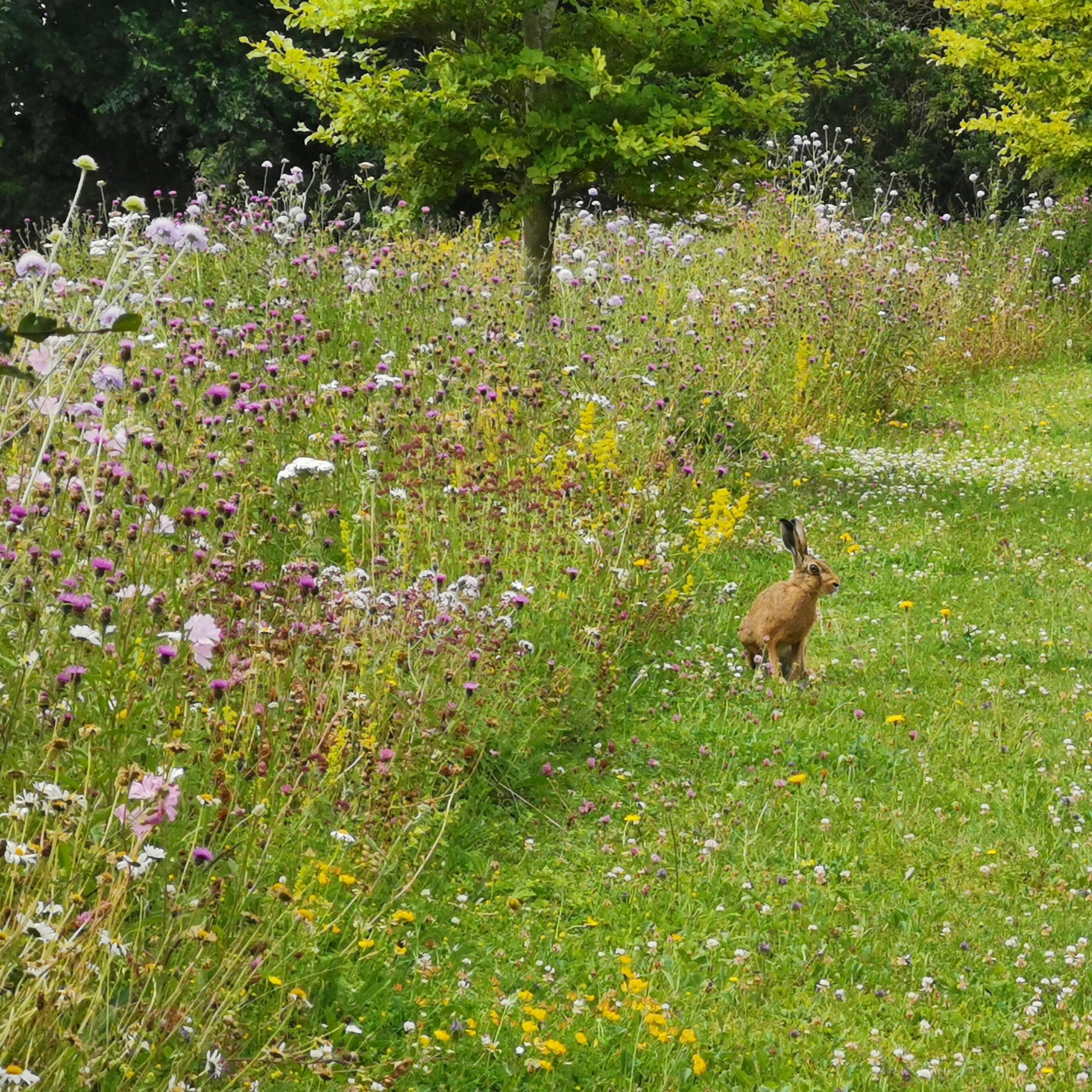
Standard lawn turf works best in everyday garden spaces
Standard lawn turf works best where the surface needs to be used regularly. Family gardens, front lawns, seating areas, play spaces and general domestic lawns usually suit traditional turf better than wildflower turf.
Practical use should lead the decision. A lawn that will carry garden furniture, pets, football practice or regular walking needs a surface that can cope with that pressure.
Standard turf remains the sensible option for many everyday gardens because it is designed for that kind of use. It gives a familiar surface that can be mown, edged, repaired and managed in a predictable way.
Soil preparation and topsoil matter for both turf types
Wildflower turf and standard lawn turf both need careful ground preparation. Poor soil, compaction, poor drainage, active weeds and shallow depth can create problems for either surface.
Standard turf often needs a smooth, even base for mowing and appearance. Wildflower turf still needs a suitable base for rooting, even though the finished surface is more natural.
Topsoil may be needed when the existing ground is weak, shallow, uneven or unsuitable. A good base helps the turf settle and gives the plants a better chance of establishing evenly.
The aim is not always rich ornamental soil, especially for some wildflower mixes. The aim is a suitable prepared base that matches the product and the site. Fresh-cut turf establishment depends on soil contact, moisture, timing and preparation, whatever turf type is chosen.
Need to build up the soil first? General Purpose Topsoil at £62.30 works well as a starting base for both wildflower and standard turf projects.
How do shade, soil and local conditions affect the choice?
Shade, soil and local conditions can change which turf type works best. Dorset and Somerset gardens can vary by exposure, drainage, soil structure and light levels, so the decision should not come from the product name alone.
Shaded gardens need careful judgement. Standard turf with a suitable grass mix may be safer in lower light areas, especially under trees, beside fences or near buildings. Wildflower turf may struggle where light is too low for flowering plants to perform well.
Soil type also matters. Clay-heavy ground can hold water and become compacted. Free-draining ground can dry quickly during establishment. Both lawn types need preparation that matches the site.
Local advice helps because two nearby gardens can behave very differently. The best turf for Dorset and Somerset gardens should be chosen by looking at soil, shade, slope, water movement, use and maintenance goals together.
Can wildflower turf and standard turf work together?
Wildflower turf and standard turf can work very well together when different parts of the garden have different jobs. A standard lawn can create the practical grass area, while wildflower turf can bring seasonal interest to quieter edges, banks or meadow-style sections.
Garden zoning often gives the strongest result. A buyer may want a mown lawn near the house, a wildflower section near a boundary and planted borders between the two.
This approach avoids the all-or-nothing problem. A garden can support family use, neat presentation and pollinator value when each surface is matched to the right area.
Mixed layouts also help landscapers and estate managers balance maintenance, appearance and biodiversity. Main routes can stay practical, while banks, verges and softer edges can carry the meadow-style planting.
Wildflower turf, standard turf and seed all have different strengths
Wildflower turf is often better than seed when the buyer wants a quicker meadow-style result. Pre-grown turf gives coverage from the start, while seed needs more time, more protection and the right conditions to establish evenly.
Seed still has a place in some projects. Large areas, budget-led schemes or patient gardeners may choose seed, while customers who want quicker coverage and fewer establishment risks may prefer turf.
Standard lawn turf is often better than grass seed when the goal is a quicker finished lawn. Seed remains useful for overseeding, repair and budget-conscious lawn creation, but turf gives a ready-grown surface where timing and appearance matter.
The choice between turf and seed should come down to budget, timescale, site size and expected finish. Turf gives faster coverage, while seed can suit larger or slower projects where the customer accepts more waiting and more risk during establishment.
Common mistakes when choosing between wildflower turf and standard turf
Common mistakes usually come from choosing by appearance alone. Wildflower turf may look attractive in photos, but it does not behave like a standard lawn and should not be judged by the same rules.
Maintenance misunderstanding is another common problem. Wildflower areas need the right cutting routine, while standard lawns need regular mowing and early watering. Neither option removes the need for care.
Preparation shortcuts can also weaken both products. A neat grass lawn and a meadow-style surface both depend on soil contact, drainage and suitable ground conditions.
How should homeowners and landscapers choose the right surface?
Choice should start with the purpose of the space. A lawn for play, pets, seating and everyday use usually points towards standard turf. A quieter area for colour, pollinators and natural interest may point towards wildflower turf.
Garden planning becomes easier when the site is divided into roles. Main use areas, meadow edges, banks, borders and lower-traffic sections can all be planned separately.
- 1Will the area be walked on regularly?
- 2Does the garden need a neat or natural look?
- 3Is pollinator value a priority?
- 4How often can the area be cut?
- 5Does the site have enough light for wildflowers?
- 6Is the soil compacted, shallow or poorly drained?
- 7Does the project need topsoil before turf is laid?
- 8Would a mixed layout work better than one surface everywhere?
- 9How will delivery, access and aftercare be managed?
Choose the turf that matches the way the space will work
Wildflower turf is a strong choice for meadow-style areas, biodiversity goals, seasonal interest, banks, verges and quieter garden zones. Standard lawn turf is the stronger choice for family lawns, pets, seating areas, formal finishes and spaces that need regular use.
Share the site use, soil condition, light level, access details and maintenance goals before ordering, and Sherborne Turf can help match the right turf and topsoil to the project.
Plastic-free turf vs netted turf →
How the turf is grown affects roots, biodiversity and what ends up in your garden long after laying.
Best turf for Dorset and Somerset gardens →
A local-conditions guide to picking the right lawn for clay, free-draining soil, shade and everyday use.
Wildflower, floral or standard — let's plan it together
Share the area size, intended use, light level and soil condition, and we'll help match the right turf and topsoil to each zone of your garden.
Or email enquiries@sherborneturf.co.uk
FAQ
Is wildflower turf better than a standard lawn?
Wildflower turf is better for quieter spaces where colour, biodiversity and seasonal change matter. Standard lawn turf is better where the surface needs regular use, clean edges and predictable mowing.
Can wildflower turf replace a normal lawn?
Wildflower turf can replace a normal lawn in the right place, but it is not the best full replacement for every garden. Family gardens often still need a standard grass area for play, seating and daily use.
Is wildflower turf suitable for pets?
Wildflower turf is usually less suitable for heavy pet use than standard lawn turf. Dogs, digging and repeated running lines can damage flowering areas.
Is wildflower turf low maintenance?
Wildflower turf can reduce mowing frequency, but it still needs seasonal cutting, weed awareness and sensible management. The maintenance is different from a standard lawn, not absent.
Does wildflower turf need topsoil?
Wildflower turf may need topsoil where the existing ground is weak, shallow, uneven or unsuitable for rooting. The topsoil should suit the wildflower product and the site conditions.
Can standard turf and wildflower turf be used together?
Standard turf and wildflower turf can work well together when the garden is planned in zones. Standard turf can suit the main lawn, while wildflower turf can suit quieter edges, banks and meadow-style areas.


