
Renovate a lawn in this order: scarify, aerate, overseed, top dress, then feed.
Doing it in sequence, in early autumn, is what turns a tired, patchy lawn into a thick one by spring, because each step prepares the surface for the next. Skip a step or run them out of order and most of the effort is wasted.
This guide runs through the order, what each step does, when to do it, the tools and rates to use, the week-by-week aftercare, when to renovate rather than returf, the mistakes that undo the work, and what to buy for every stage.
Six things that decide whether an autumn renovation works.
Everything for the job
Order grass seed, Top Dressing and an autumn feed together, delivered across the south of England.
Why the order matters
Each renovation step prepares the surface for the next, so the sequence is not a preference, it is the difference between a lawn that transforms and one that barely changes. Dressing before you scarify buries the thatch you needed to remove. Seeding before you aerate drops seed onto compacted ground it cannot root into. Feeding a high-nitrogen feed before you seed pushes the old grass to out-compete the new seedlings. Work through scarify, aerate, overseed, dress and feed in that order and every stage lands where it should, with the seed reaching open soil, the dressing giving it a bed, and the feed arriving once the lawn is ready to use it.
When is the best time for lawn renovation?
Renovate in early autumn, ideally September, when the soil is still warm from summer and autumn rain does much of the watering for you. Grass seed needs the soil reliably above 8 to 10°C to germinate well, and September usually sits at 12 to 15°C, so the new grass has eight to ten weeks of root growth before winter slows it. Weed competition is also low, because most annual weeds have stopped germinating by then. Spring, around April, is the second window, though it needs more watching for dry spells through its first summer. Avoid renovating into cold, wet soil in late autumn, when seed sits and sulks until spring, or in high summer, when it dries out faster than you can water it.
What tools and materials do you need?
Gather the kit before you start, because a renovation flows best done in one run. For clearing thatch you need a scarifier or a stiff spring-tine rake; for compaction, a hollow-tine or solid-tine aerator, or a garden fork on a small lawn. For seeding you want grass seed and ideally a spreader for even cover, and for dressing a wheelbarrow, a shovel and a lute or stiff brush. Add Top Dressing and an autumn feed, and a sprinkler or hose for the watering that follows. Ordering the seed, dressing and feed together means the job runs without a mid-weekend trip for the one thing you forgot.

COBRA SA32E 13" Electric Powered Scarifier
A 13 inch cutting width takes the dead layer out of a domestic lawn in two passes without the hire cost.
Get the COBRA SA32E scarifier →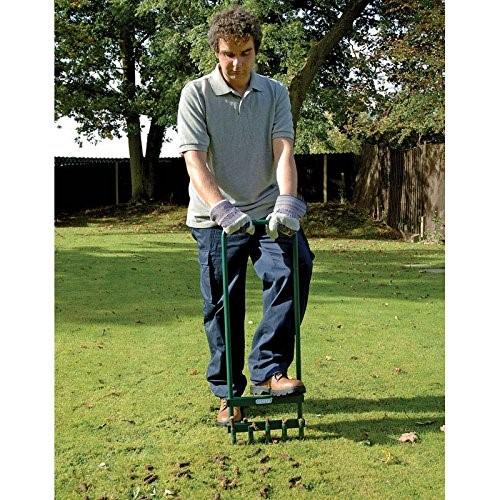
Draper Lawn Aerator
Spikes the worn lines and gateways where the ground is hardest, so seed has somewhere to root.
Order the Draper Lawn Aerator →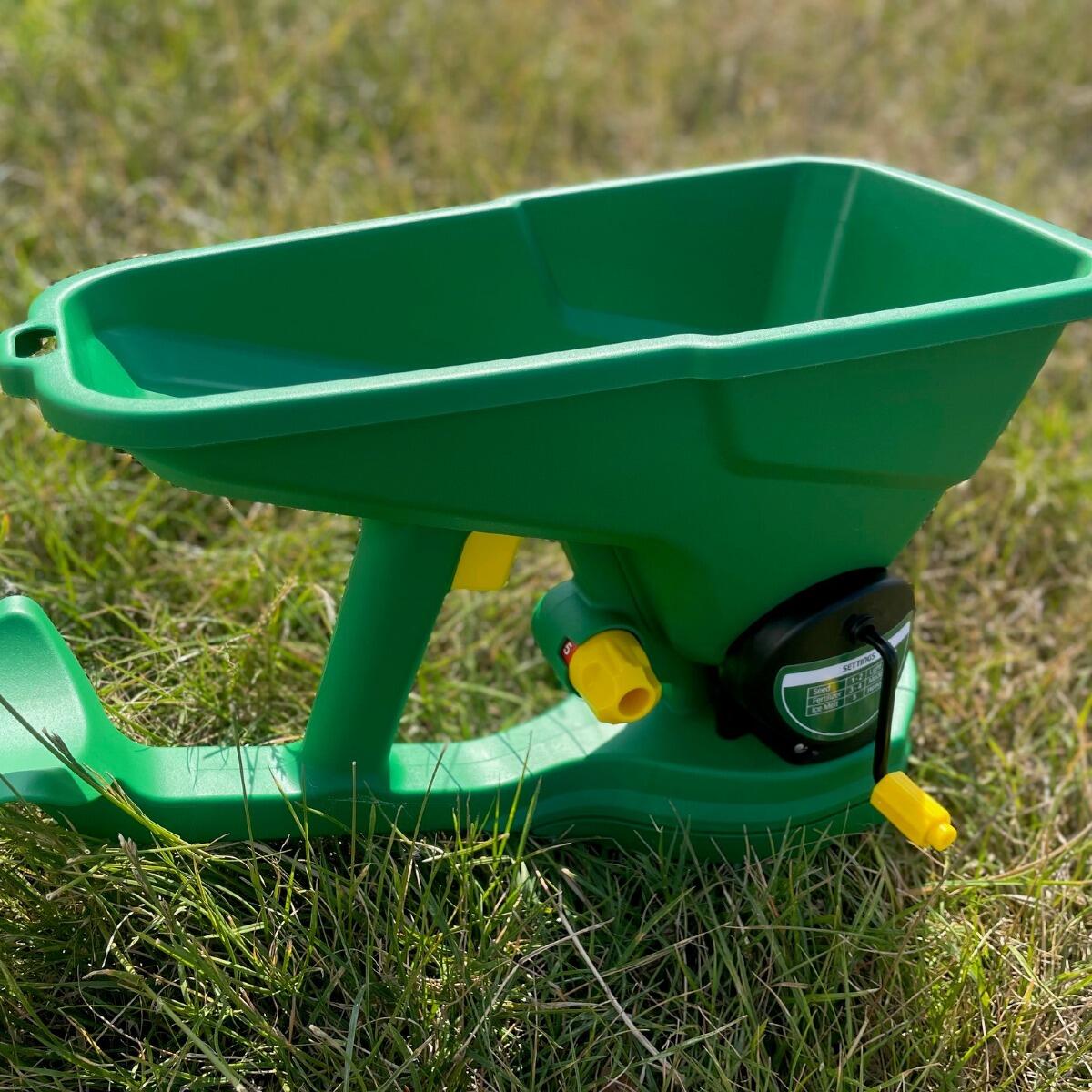
Handy Spreader 3kg
Puts seed and feed down at an even rate, which hand scattering rarely manages across a whole lawn.
Buy the Handy Spreader 3kg →More kit for the job sits in the lawn care equipment and rakes, lutes and spazzles ranges.
STEP ONEStep one: scarify
Scarify first to pull out the thatch and moss choking the base of the grass. A scarifier or a stiff spring-tine rake drags out the dead layer so air, water, seed and dressing can reach the soil beneath. If the lawn is heavily mossy, kill the moss with an iron-rich feed a couple of weeks before, then scarify out the blackened moss so it does not simply regrow. Work in two directions across the lawn for a thorough job, rake up the debris, and expect it to look rough afterwards. That rough, opened surface is exactly what the seed needs, and it recovers quickly at this time of year.
STEP TWOStep two: aerate
Aerate next to relieve compaction and open the soil. Solid-tine spiking works for a light lawn; hollow-tining, which pulls out small cores of soil, does far more on heavily compacted or clay ground and pairs well with a sandy top dressing brushed into the holes. Either way, aerating lets air and water down to the roots and gives new seed somewhere to establish rather than washing off a hard surface. Concentrate on the worn lines, gateways, goal mouths and play areas where the ground is hardest and the grass is thinnest.
STEP THREEStep three: overseed
Overseed the thin and bare areas straight after aerating, while the surface is open. Spread grass seed at about 25g per m² for general overseeding, up to 35g on bare patches, which is roughly half the rate for a new lawn from bare ground. Sow in two passes at right angles for even cover, and press the seed into the surface with the back of a rake or a light roll so it makes contact with the soil, which is the single biggest factor in germination. Early autumn soil is warm enough for fast results: ryegrass mixes come up in about a week, while finer fescues take a fortnight or more.

ST Overseed seed
Four varieties of perennial ryegrass, bred for wear and close mowing, sold by the kilogram so you buy to the rate rather than to a box size. Applied at 25g per m² for overseeding, 35g on bare ground.
STEP FOURStep four: top dress
Top dress over the seed with a thin 3 to 5mm layer of Top Dressing, worked in with a lute so about 75% of the grass still shows. The dressing levels minor hollows and gives the new seed a fine, firm, moisture-holding bed to root into, which lifts germination noticeably over bare overseeding. A 0.73m³ bulk bag covers about 240m² at this depth, so most lawns take well under a bag for the dressing part of the job. For the full method and coverage figures, see the lawn top dressing guide.
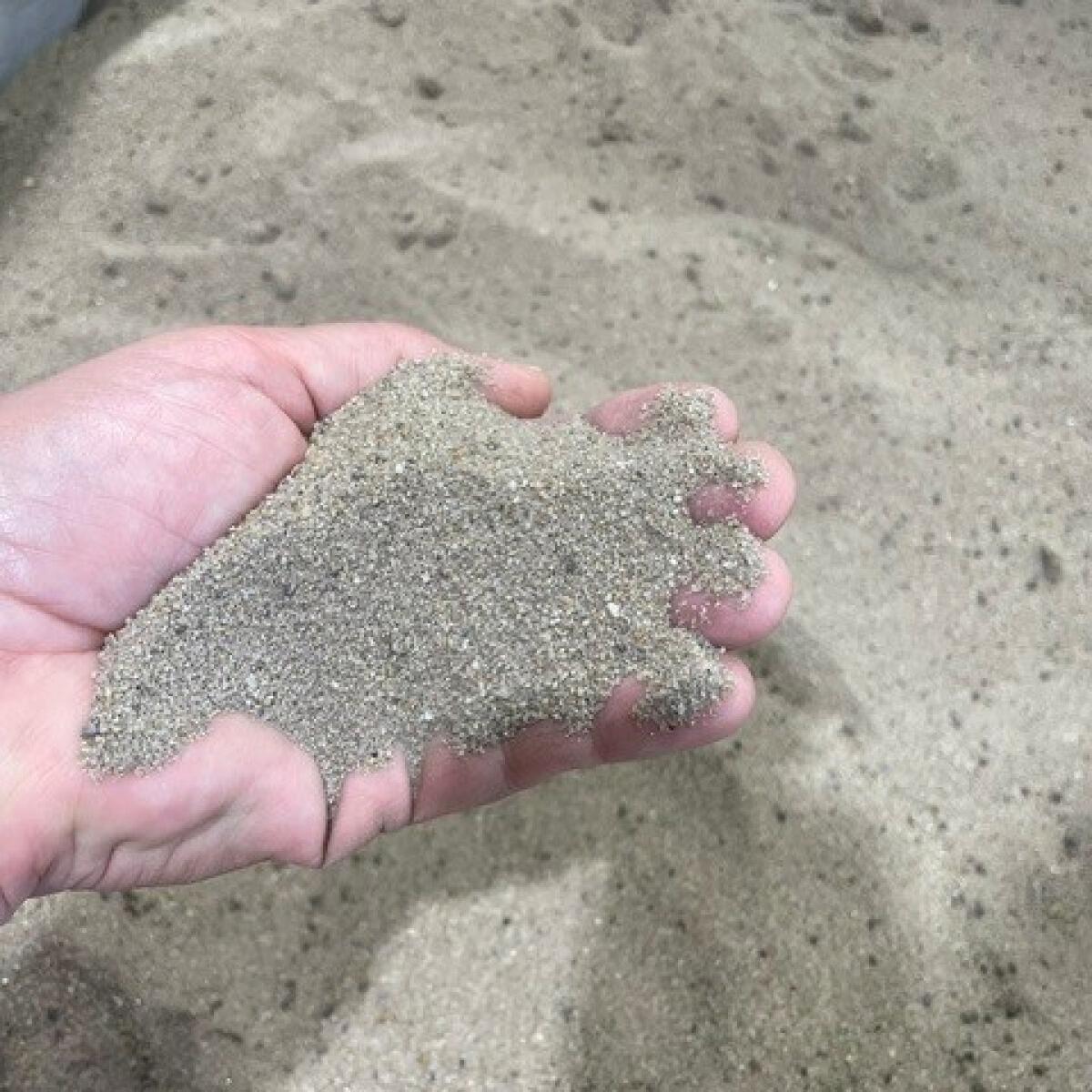
Top Dressing is blended 70% sharp sand to 30% sterilised soil, so it flows through the blades rather than capping the seedbed. Weed, seed and pathogen free, and peat free.
Order Top Dressing in bulk bags →STEP FIVEStep five: feed and water
Finish with an autumn feed to build roots and harden the grass for the cold. An iron-rich autumn lawn feed strengthens established grass and deepens its colour, while Stripy Green fertiliser suits the newly seeded areas that need root growth without soft top growth. Spread it evenly at about 35g per m² on moist ground. Then keep the seeded surface just moist for the first two to three weeks if the rain does not do it, watering little and often, because a dry seedbed is the single biggest cause of a patchy result after all that work.
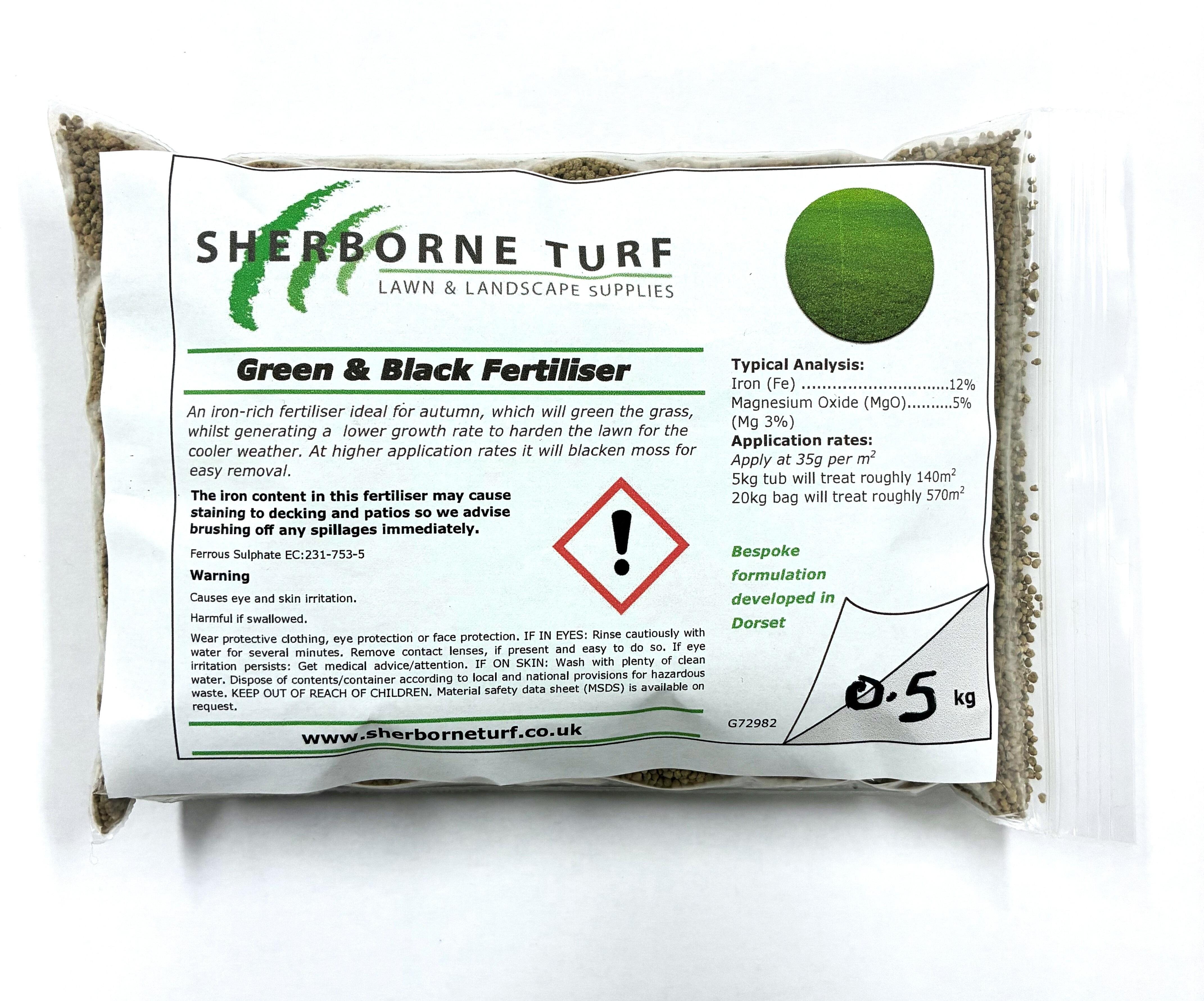
Green & Black
Iron and magnesium rich at Fe 12%. Put down at 35g per m² it hardens the lawn for winter, and at 70g it blackens moss ready for scarifying. It stains stone and timber, so keep it off paths.
Get Green & Black lawn feed →
Stripy Green
The one to use on freshly seeded and freshly turfed ground, at 35g per m², where you want roots going down rather than soft growth going up.
Discover Stripy Green fertiliser →How much seed, dressing and feed do you need?
Scale the quantities to the lawn. For overseeding, allow about 25g of grass seed per m², so a 150m² lawn takes roughly 3.75kg and a 300m² lawn about 7.5kg. For dressing, a 0.73m³ bulk bag covers about 240m² at 3mm, so the 150m² lawn takes well under a bag and the 300m² lawn a bag and a bit. Feed goes on at about 35g per m², so a 5kg tub covers around 142m² and a 20kg bag around 571m². The calculator turns your lawn size into quantities for all three, so you order once and finish the job without a second trip.
Put your length and width in and the calculator returns seed in kilograms, dressing in bulk bags and the feed to match, so nothing runs short halfway through the Sunday.
Should you renovate or returf?
Renovate if more than about half the lawn is still healthy grass, and returf if it is mostly moss, weeds or bare soil. Overseeding and dressing thicken and level a lawn that has good grass in it, which is cheaper, quicker and less disruptive than starting again. But where the grass has all but gone, a season of renovation rarely catches up with what fresh lawn turf achieves in a fortnight, and fresh turf with a starter feed gives a new lawn a strong start. As a rough test: if you can see plenty of living grass to build on, renovate; if you are mostly looking at bare earth and thatch, returf.
Starting again on a Dorset or Somerset lawn? Fresh turf is cut to order at the yard. Browse the lawn turf range →
Aftercare, week by week
The four weeks after seeding decide the outcome. In the first fortnight, keep the surface moist and stay off the lawn entirely, roping off busy routes if you can, so seed is not trodden into hollows and seedlings are not pulled up. By weeks three and four the seed has germinated and rooted, and you can water less often but more deeply to draw the roots down. Leave the first cut until the new grass reaches about 100mm, then take only the top third off with a sharp blade set high, and mow little and often after that. Hold back heavy use and the next feed until the lawn is growing steadily, usually into mid-autumn.
Common renovation mistakes to avoid
Most failed renovations come down to a handful of avoidable mistakes. Seeding into thatch without scarifying, so the seed never touches soil. Dressing too thick in one go and smothering the grass. Sowing into cold soil too late in the season, so the seed sits over winter. Letting the seedbed dry out during germination, which kills seedlings in a day of sun. Buying the cheapest seed regardless of whether it suits the lawn's shade or wear. And mowing the new grass too early or too short, which pulls seedlings out of the soft ground. Get past those six and the renovation does what it should.
Shade under trees and hedges is the usual reason a mix fails. The Lawns and Paddocks seed range carries ST Shade for those areas and ST Rescue for late sowing into colder ground.
Two worked examples
A tired 150m² back lawn after a dry summer, thin in the wear lines and mossy in the shade, was scarified and aerated over a weekend, overseeded at 25g per m² with about 3.75kg of grass seed, top dressed with a single 0.73m³ bulk bag at 3mm, and finished with an autumn feed. Kept moist and roped off for a fortnight, it went into winter recovering and came back in spring noticeably thicker, greener and more even.
A compacted 60m² side lawn used as a shortcut was hollow-tined to pull cores, brushed clear, then overseeded a little heavier at 35g per m² on the bare tracks and lightly dressed with a sandy dressing worked into the holes. Watered daily for three weeks and roped off, the worn lines had knitted back over by mid-autumn, all off a part-bag of dressing and about 2kg of seed.
Autumn lawn renovation FAQ
What order should I renovate my lawn in?
Scarify, aerate, overseed, top dress, then feed. Each step opens or prepares the surface for the next, so the sequence matters.
When is the best time for lawn renovation?
Early autumn, around September, with warm soil above 8 to 10°C and reliable rain for germination and recovery. Spring is a second option.
Do I need to scarify before overseeding?
Yes. Scarifying clears the thatch so seed and dressing reach the soil. Seeding over a thatchy lawn wastes most of the seed.
How much grass seed do I need to overseed?
About 25g per m² for general overseeding, up to 35g on bare patches, which is roughly half the rate for a new lawn from bare ground.
How much top dressing do I need for renovation?
About one 0.73m³ bulk bag per 240m² at 3mm. Use the calculator to work out the exact amount for your lawn.
How long does grass seed take to germinate in autumn?
Ryegrass mixes usually come up in about a week, finer fescues in two to three weeks, as long as the soil is above 8 to 10°C and stays moist.
Should I renovate or returf?
Renovate if more than about half the lawn is still healthy grass. Returf if it is mostly moss, weeds or bare soil, where new turf gives a faster, better result.
When can I mow after overseeding?
Wait until the new grass reaches about 100mm, then take only the top third off with a sharp blade. Cutting too early or too short pulls seedlings out.
What Garden Machinery Do You Need to Maintain a Healthy Lawn All Year?
Matching mowers, scarifiers and trimmers to the size of the lawn and the finish you are after.
Read the lawn machinery guide →Fresh-Cut Turf Establishment: Why Freshness, Soil Contact and Timing Matter
If the renovate-or-returf test points to new turf, this is what decides whether it roots properly.
Read how fresh-cut turf establishes →Renovate your lawn this autumn
Sherborne Turf supplies the seed, dressing, feed and tools for a full autumn renovation from The Lawn and Landscape Centre in Sherborne, Dorset, DT9 4GH, delivered on its own vehicles across the south of England. Order grass seed, Top Dressing and an autumn feed, size the job with the calculator, and call 01935 850388 for advice on a specific lawn or a delivery quote.
Talk it through with the yard on 01935 850388 or email enquiries@sherborneturf.co.uk. Landscapers renovating several sites can apply for a trade account.


