
Wildflower turf is pre-grown meadow turf, a living mat of native flowers and fine grasses that gives an instant species-rich surface.
It is sold by the roll, laid in early autumn or spring onto prepared low-fertility ground, and delivered on Sherborne Turf's own vehicles across the south of England, with Dorset, Somerset, Devon, Hampshire and Wiltshire our key counties.
This guide covers what it is, what it costs, the roll sizes, which type suits which site, annual against perennial meadows, how much you need, how to prepare, lay and look after it, the cutting regime, and how local delivery works.
Buy wildflower turf
Order wildflower turf for delivery across the south of England, and size the area with the calculator.
What is wildflower turf?
Wildflower turf is a living mat of native wildflowers and fine grasses, grown on until it is established and then cut into rolls, so you lay an instant meadow rather than sowing and waiting a year or more for it to fill in. It gives species-rich coverage from the day it goes down, which is why it suits banks, verges, orchard floors and meadow areas where you want flowers and biodiversity quickly. Because it arrives already grown and knitted together, weeds have far less chance to take hold than they do in a sown meadow's slow, patchy first season, and the result is far more reliable.
How much does wildflower turf cost?
Wildflower turf is priced by the square metre, and each roll covers a set area, so the total follows from the size of your plot. Because it is grown as a living meadow mat rather than sown from a packet, it costs more per square metre than a plain grass seed mix, and it buys you instant, established coverage and a far more reliable result in return. The live price sits on the wildflower turf product page; add your area to the basket for the current total, and remember to factor delivery, which is charged by postcode.
Is wildflower turf worth it over time?
Over a few years, wildflower turf often works out cheaper to keep than a lawn, even though it costs more to buy. A lawn wants mowing weekly through the season, feeding and watering; a wildflower area wants cutting once or twice a year and no feeding at all. On a steep bank or an awkward corner, swapping a weekly strim for a single late-summer cut is a real saving in time and fuel, on top of the wildlife it brings in. That running-cost gap is much of why demand for it keeps rising, and why it suits the parts of a garden that are a chore to mow.
What sizes, and how much do you need?
Measure the area in square metres and add a small margin for shaping and trimming, then order that many rolls. For an irregular bank or verge, split it into rectangles, work out each and add them up. The turf and topsoil calculator turns your measurements into a roll count. Order carefully, because living turf is cut to order and cannot be refunded once cut, so it is better to measure twice than to run short on the day and hold up the laying while more is arranged.
Annual or perennial: which meadow do you want?
There are two broad kinds of meadow, and it helps to know which you are after. A perennial meadow, the type most wildflower turf creates, comes back year after year from the same plants and settles into a stable mix of native flowers and fine grasses, giving colour from late spring into summer. An annual, cornfield-style display of poppies, cornflowers and the like is a one-season splash usually grown from seed and resown each year. For a lasting, low-maintenance meadow that establishes at once, perennial wildflower turf is the choice; for a bold one-year show, an annual seed mix is the cheaper route.
Which wildflower turf for which site?
Match the turf to the site and the use. A general landscape wildflower turf suits open, sunny banks, verges and meadow areas; a native-enriched or species-rich mat suits gardens aiming for maximum biodiversity; and low-growing or shade-tolerant options suit awkward or partly shaded spots such as orchard floors and the edges under trees. Browse the choice across the wildflower range, and if you would rather sow, compare the wildflower seed mixes as well. Sunny, open, poor ground is where any wildflower turf does best.
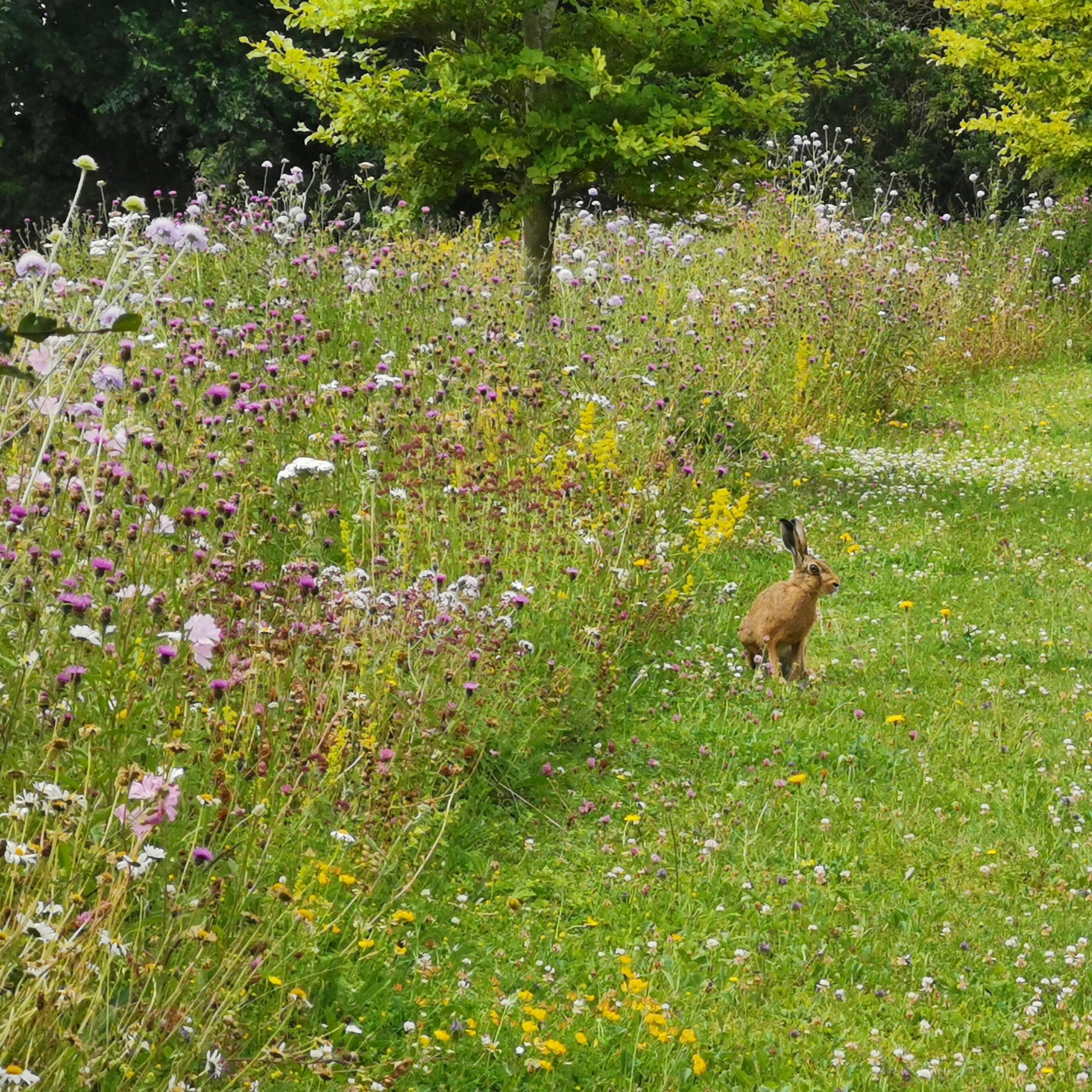
Landscape 34 Wildflower Turf
The broad meadow mat for banks, verges and open areas where you want a working meadow rather than a display bed.
Shop Landscape 34 Wildflower Turf →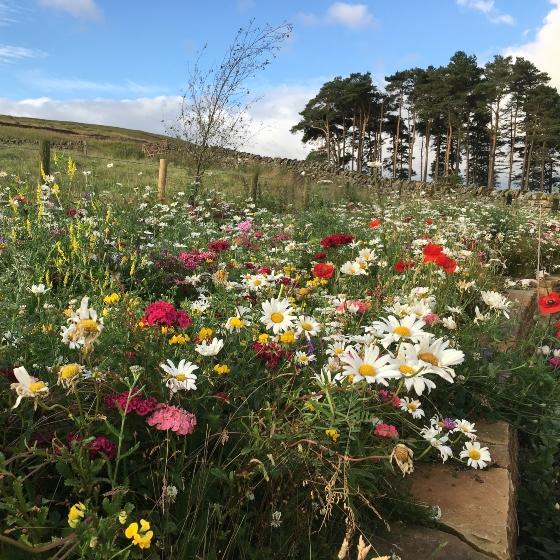
Native Enriched Wildflower Turf
Increased species diversity, so the pick where pollinators and habitat are the point of the project.
Get Native Enriched Wildflower Turf →
Low Growing Wildflower Turf
Keeps its height down, which suits a front garden, a sightline or anywhere a tall sward would look unkempt.
Buy Low Growing Wildflower Turf →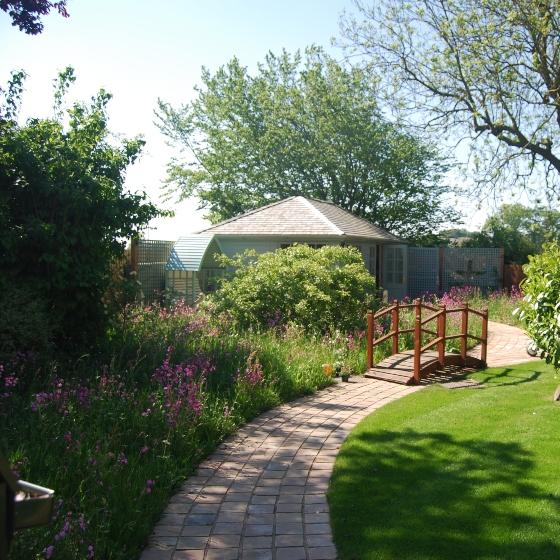
Shade Tolerant Wildflower Turf
Built for low light, so it answers the awkward shaded corners that defeat both a lawn and a standard meadow mix.
Order Shade Tolerant Wildflower Turf →How to prepare the ground
Prepare a weed-free, firm, level, low-fertility bed, and resist the urge to improve it. Clear the site of existing weeds and grass, rake it level and firm it lightly, but do not add compost or rich topsoil, because extra nutrients let the grasses crowd out the flowers, which is the opposite of what you do for a lawn. On a very rich site, stripping off the top few centimetres, or mixing in some sharp sand, lowers the fertility and gives the flowers the edge. Getting the ground clean and lean before delivery is the single biggest thing you can do for a good meadow.
This is the one job where the usual advice runs backwards. Everything the topsoil and compost ranges are for, feeding and enriching, works against a meadow. Order those for the beds and the lawn, and leave the wildflower ground lean.
How to lay wildflower turf
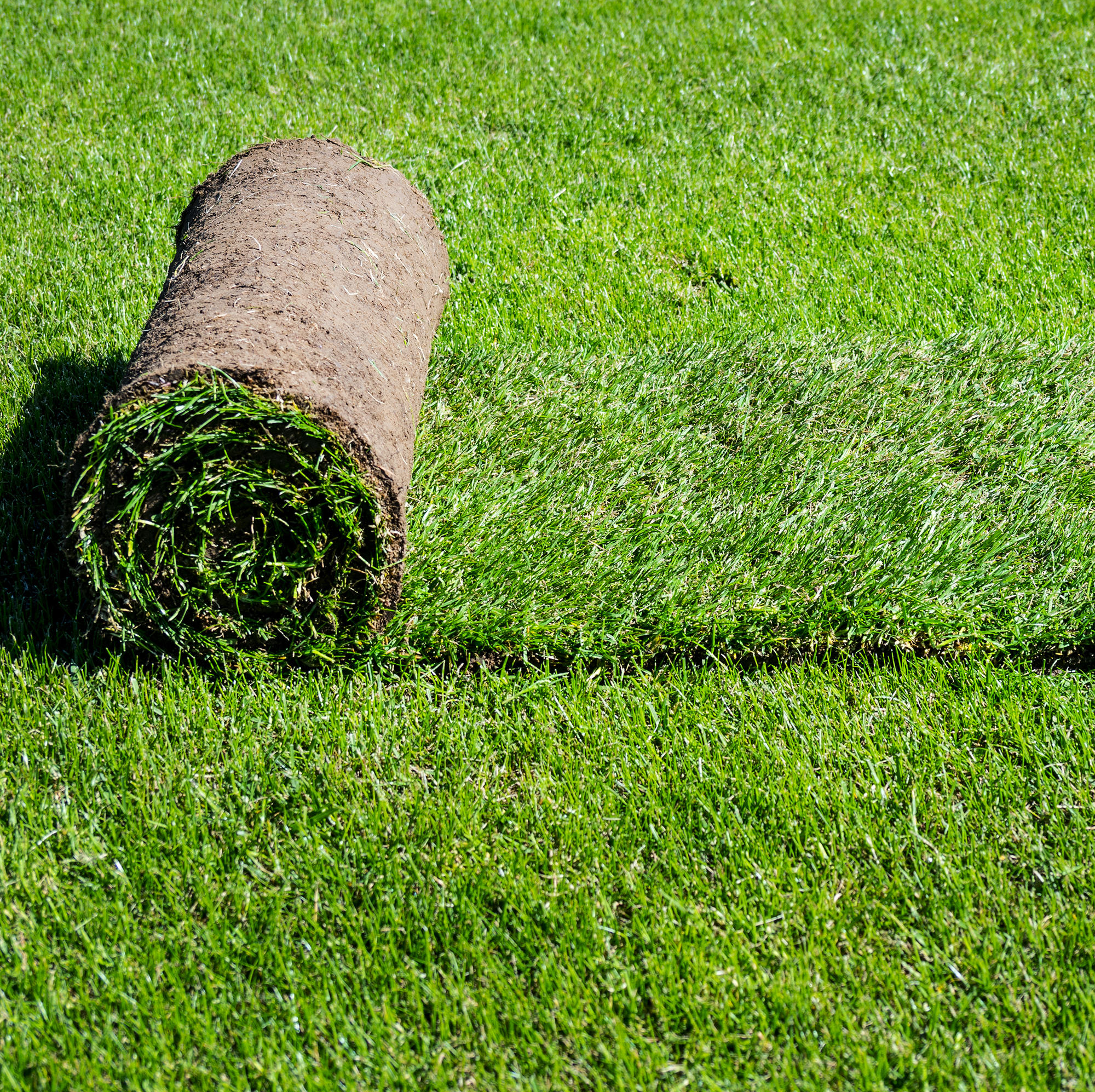
Lay wildflower turf the day it arrives, onto the prepared bed, in staggered rows with the edges butted tight and no gaps that could dry out or let weeds in. Firm each roll down so the roots make contact with the soil, working off boards on a soft or sloping site so you do not dent the surface, then trim the edges to the shape you want and water it in well. Keep it watered for the first few weeks while it roots, especially on a bank or in a dry spell. Because it is living turf that cannot be stored, book delivery for a day you can lay it start to finish.
First-year care
The first year is about rooting and settling rather than a full flower display. Water through dry spells in the first couple of months while the roots take, keep foot traffic off it, and pull out any obvious vigorous weeds by hand before they seed. An autumn-laid meadow spends the winter rooting and comes into its first proper flowering the following summer; a spring-laid one needs more watching through its first summer. Do not feed it, however tempting the thin early growth looks, because feeding only strengthens the grasses at the flowers' expense.
How to maintain a wildflower meadow
Cut a wildflower meadow once or twice a year and always remove the clippings, which is the single thing that keeps it flowering rather than turning to rough grass. The main cut comes in late summer, after the flowers have set and dropped their seed, and a second tidy-up cut can follow in autumn. Removing the arisings keeps the fertility low, so the flowers stay ahead of the grasses; leaving them mulches the ground, feeds the grasses and thins the meadow out over a few years. Sowing yellow rattle into an established meadow weakens the grasses further, because it is semi-parasitic on grass roots, and lets more flowers through.
When to lay wildflower turf
Lay wildflower turf in early autumn or spring, onto prepared, low-fertility ground. Early autumn is a strong window, with warm soil and reliable rain settling the roots before winter, so it is established and ready to flower the following summer. Spring works too, though it needs more watering through its first summer while it establishes. Avoid laying into the depths of winter, when the ground is cold and waterlogged and the roots will not take, or in high summer, when it is hard to keep the fresh turf watered enough.
Wildflower turf, seed or a standard lawn?
Choose wildflower turf for an instant, reliable meadow, seed for the lowest cost over a larger area, and a standard lawn where you need a hard-wearing surface to walk and play on. Turf gives coverage from day one and beats the weeds; a wildflower seed mix is cheaper but slower and patchier in its first year and needs a clean, weed-free start; and a proper lawn turf is the answer for everyday footfall and games. For the full comparisons, see wildflower turf against seed mixes and wildflower turf against a standard lawn.
Wildflower turf and biodiversity
A wildflower area is one of the quickest ways to bring pollinators into a garden, which is much of why demand for it keeps rising among homeowners, schools and councils alike. The mix of native flowers gives nectar and pollen across the season for bees, hoverflies and butterflies, and the longer sward shelters beetles, small mammals and the birds that feed on them. Turning a hard-to-mow bank, a road verge or an awkward corner into wildflower turf swaps a weekly strimming job for a working habitat, which is an easy win on both time and wildlife.
How does local delivery work?
Wildflower turf is cut to order and delivered on Sherborne Turf's own vehicles across the south of England, with Dorset, Somerset, Devon, Hampshire and Wiltshire our key counties. Delivery is charged by postcode, and collection from the yard avoids the charge. Because it is living turf that cannot be held over, lay it the day it arrives; check your area and costs on the delivery page and book a date that matches when you can prepare the ground and lay it in one go.
Book the delivery for a day the ground is already cleared, raked and lean, and the whole job runs start to finish in one go.
Two worked examples
A homeowner near Shaftesbury turned a steep, hard-to-mow bank of about 45m² into wildflower turf one September. The ground was cleared and raked but not fed, the rolls laid off boards and watered in, and by the following summer the bank drew in bees and needed only a single late-summer cut with the clippings raked off, instead of the weekly strim it used to demand.
A school wanted a species-rich strip of about 30m² along a sunny fence for a pollinator project the children could watch. Wildflower turf gave instant cover from the first week, laid onto stripped, low-fertility ground in early autumn, watered through the first dry spell, then cut once the next August with the clippings raked off to keep the flowers coming back year on year.
Wildflower turf FAQ
How much does wildflower turf cost?
It is priced by the square metre and sold by the roll, so the total follows from your area. The live price is on the product page; add your quantity for the current figure.
When should I lay wildflower turf?
Early autumn or spring. Early autumn gives warm soil and steady rain to root it before winter. Lay it the day it arrives, as it is living turf.
Do I need to improve the soil first?
No. Wildflower turf prefers lower fertility, so clear weeds and rake level, but do not add compost or rich topsoil, which favours grasses over flowers.
How do I maintain a wildflower meadow?
Cut once or twice a year, mainly in late summer after flowering, and always remove the clippings to keep fertility low so the flowers stay ahead of the grasses.
How much wildflower turf do I need?
Measure the area in square metres and add a small margin for shaping. Use the calculator to turn your measurements into a roll count.
Can I walk on wildflower turf?
Occasional light use is fine, but it is not made for daily footfall. For everyday walking and play, use a hard-wearing lawn turf instead.
Is wildflower turf better than seed?
Turf gives instant, reliable cover and beats the weeds; seed is cheaper over a large area but slower and patchier in its first year. It depends on budget, area and patience.
Do you deliver wildflower turf locally?
Yes, on our own vehicles across the south of England, with Dorset, Somerset, Devon, Hampshire and Wiltshire our key counties, charged by postcode, with collection from the yard as an option.
Wildflower Turf vs Seed Mixes: Which Gives Better Results Faster?
The comparison the draft points you to, on speed of coverage, weed pressure and cost across a larger area.
Read wildflower turf against seed mixes →Wildflower Turf vs Standard Lawn: What Homeowners and Landscapers Need to Know
Where a meadow beats a lawn and where it does not, for family gardens, banks, verges and formal spaces.
Read wildflower turf against a standard lawn →Order wildflower turf for autumn
Sherborne Turf grows and delivers species-rich wildflower turf from The Lawn and Landscape Centre in Sherborne, Dorset, DT9 4GH, across the south of England on its own vehicles. Order wildflower turf, size the area with the calculator, and call 01935 850388 for a delivery quote. To weigh it against sowing, read wildflower turf against seed mixes.
For a postcode delivery quote or advice on an awkward bank, call 01935 850388 or email enquiries@sherborneturf.co.uk. Landscapers, estates and grounds teams laying meadow at scale can apply for a trade account.


